How a Golf Cart GPS System Unlocks On-Course Sales: F&B Revenue and The Halfway House Bottleneck
The golf cart GPS system is changing the way food and beverage orders are made. During the golf experience, food and beverage is a valuable part of the experience, but it is also one of the easiest revenue opportunities to lose. Golfers want a drink, snack, sandwich, coffee, or halfway-house meal, but they also don’t want to slow down or stop moving. If the line is too long, people often just choose to skip the purchase and head to the 10th tee.
For golf course operators, this creates a difficult trade-off. The halfway house should drive revenue and improve the player experience as a whole, but when the process is ineffective and slow, it can quickly become a bottleneck that disrupts the flow of the round. A few delayed groups at the turn can create pressure across the back nine, while players who skip the halfway house altogether represent missed food and beverage sales.
This is where the golf cart GPS system becomes an invaluable tool. At Tagmarshal, we help courses move the ordering decision earlier in the round, giving players a more convenient experience and giving F&B teams time to prepare. Players can order directly from the cart before they reach the turn.
This leads to a smoother and smarter approach to on-course hospitality. Players spend less time waiting, kitchens can prepare ahead, and golf operations can protect pace of play while allowing for more on-course revenue opportunities. In this article, we’ll cover everything you need to know about how golf course technology unlocks course sales.
Golf Cart GPS System: Why The Halfway House Becomes a Bottleneck
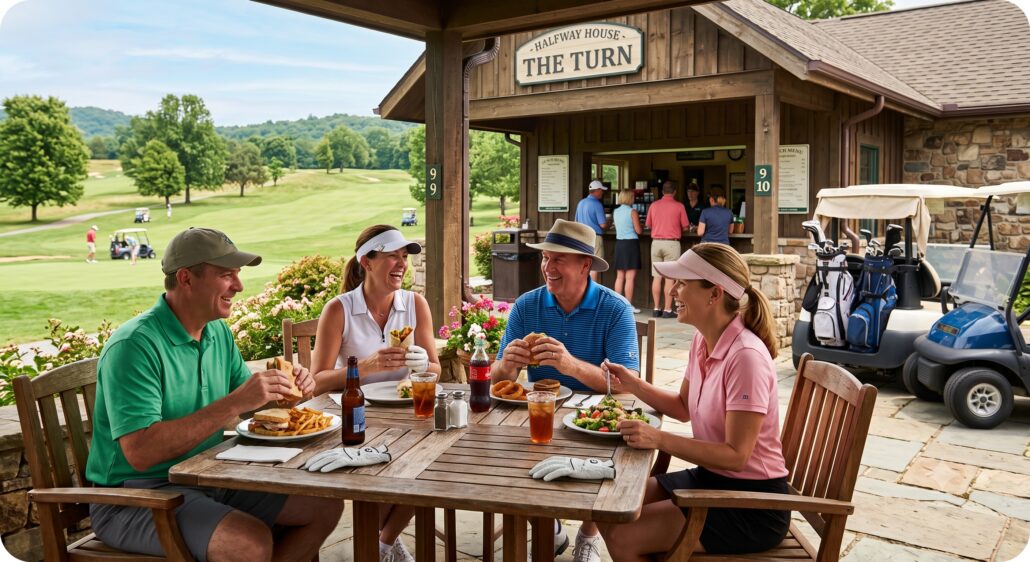
The 9th hole is one of the most important points in the round. This is where golfers decide whether to stop, refuel, use the restroom, or continue straight to the 10th tee. The decision is often shaped by time pressure.
Golfers may want to order food and drinks, but also understand that stopping for too long can hold up the group behind them. If the halfway house looks busy, they may decide it’s not worth the delay. This means the course loses a sale, and the golfer misses out on a better on-course experience.
Of course, the opposite can also happen. If several groups stop at the same time, queues begin to form. As such, the turn starts to affect course flow. A delay that begins at the counter can suddenly turn into a back-nine pace issue.
The traditional halfway-house model is reactive. Players arrive, choose what they want to eat and drink, place an order, wait, pay, collect, and then try to get back into position. During quiet periods, this works well enough, but it’s easy to see how it can quickly place pressure on golfers and staff during peak hours.
The smarter way to operate is to have a proactive model in place. This way, instead of waiting for golfers to arrive, operators can use cart location data to invite players to order earlier, giving the kitchen time to prepare before the group reaches the clubhouse.
From Reactive Service to Proactive Hospitality
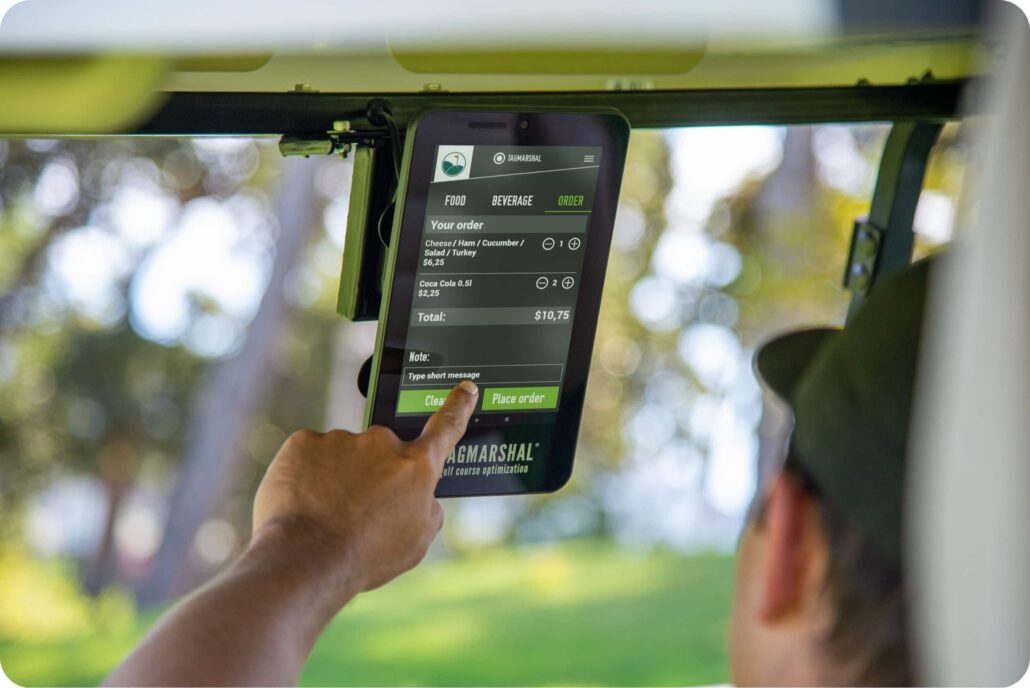
A golf cart GPS system should do more than just show yardages. It should help the course operate more effectively and intelligently.
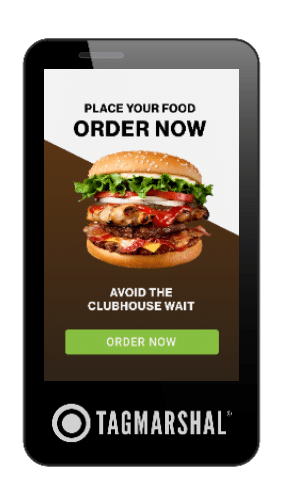
With Tagmarshal’s F&B Ordering feature, players can complete orders from their 2Way cart screens before reaching the halfway house or clubhouse. This allows staff to prepare ahead of time, reducing the pressure that builds when several groups arrive at once.
This naturally creates a better workflow for everyone involved. Golfers are not forced to choose between food and pace. F&B teams receive orders earlier and can prepare with more confidence. Front-of-house staff can focus on service rather than simply managing a queue.
This matters because on-course hospitality is part of the player experience. A golfer who can order easily, pick up quickly, and return to the round without feeling rushed is more likely to view the halfway house as a benefit rather than an interruption.
For courses, the golf cart GPS system also creates a consistently reliable revenue channel. The easier it is to order, the more likely players are to engage. Convenience is incredibly important. When ordering is delayed until the point of friction, sales may be lost. When ordering is built into the natural rhythm of the round, F&B becomes part of the flow.
Reaching Golfers at the Right Moment
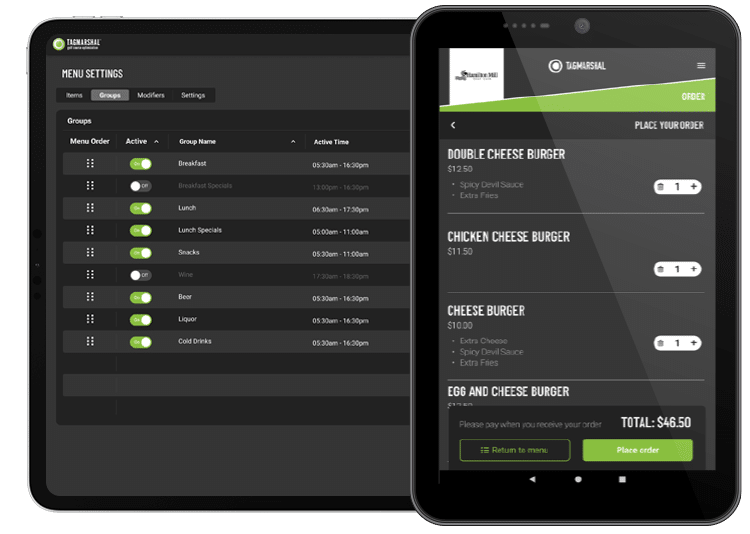
Timing, of course, is majorly important. A prompt that appears too early may be ignored because the golfer is not yet thinking about the turn. A prompt that appears too late may not give staff enough time to prepare. The best moment is often shortly before players reach the halfway house, when they are close enough to make a decision but early enough for the kitchen to act.
Tagmarshal allows courses to trigger automated F&B prompts at strategic locations using golf cart GPS system technology. For example, via Tagmarshal’s system, a course can set up a prompt to appear when a cart enters a certain area on the 8th hole. The 2Way screen can then display the menu, daily specials, promotions, or a simple reminder to order ahead.
Operators should see this as timely communication, rather than any sort of aggressive sales pitch. A golfer approaching the turn may appreciate a reminder that they can order a drink or some food without losing any momentum.
A clear example of this can be seen in the way Falcon Ridge Golf Club operates. The course uses Tagmarshal’s 2Way screens to display its food and beverage menu on the 8th hole, helping speed up the turn, prevent backup, improve course flow, and increase revenue. This happens because the course is connecting the player’s immediate needs with the course’s operational goals.
Golf Cart GPS System: Protecting Pace While Growing Revenue
F&B revenue is, of course, important, but it should never come at the expense of the round. Courses need to increase on-course spend without creating slow play, frustration, or back-nine congestion. This is why F&B ordering and pace management need to work together.
If a course is solely focused on sales, it may overload the turn. If they are only focused on pace, it may push players past the halfway house, which means missing out on potential revenue. The smartest solution is to make the turn faster, more predictable, and easier to manage.
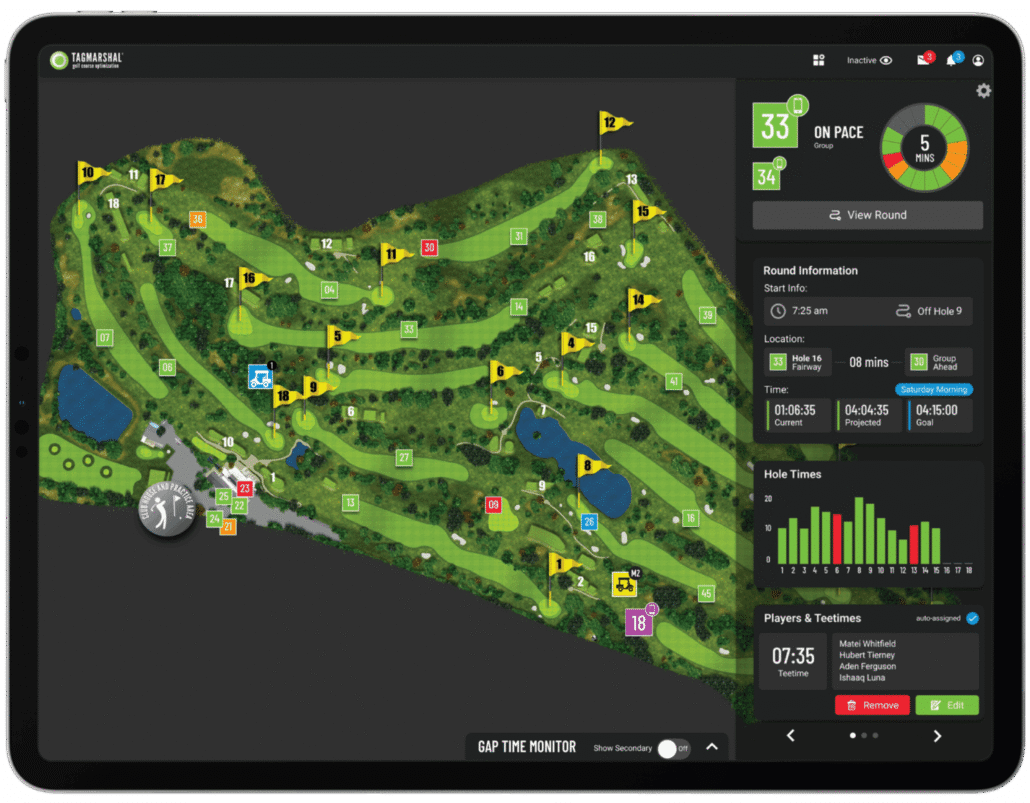
Tagmarshal’s Live Map gives operators real-time visibility of group locations and pace across the course. Staff can see which groups are on pace, slow, held up, or causing delays. This allows golf operations teams to understand whether the turn is affecting the rest of the field and respond before small issues become larger pace problems.
For example, if one group loses time at the halfway house, the course’s team can see the effect on the Live Map. If several groups are approaching the turn close together, staff can anticipate pressure before it arrives. This creates a stronger connection between golf operations and F&B, which is key for busy days. The end goal is to sell more food without damaging the pace and quality of the round.
Turning the Cart Screen Into a Revenue Channel
The 2Way cart screen is one of the most valuable communication points on the course. Golfers are already using it for course information, pace updates, and operational messages. Adding F&B ordering turns that same screen into a direct revenue channel.
Courses can use the screen to display full menus, specials, seasonal promotions, hydration reminders, and halfway house prompts. This creates opportunities that static signage cannot match. A sign at the clubhouse only reaches players once they arrive. A cart screen prompt reaches them while they still have time to act.
This is especially great for high-margin, quick-service items that can be prepared efficiently. Grab-and-go sandwiches, wraps, protein snacks, sports drinks, coffee, smoothies, and daily specials can all be promoted in a way that supports revenue and service speed at the same time.
The cart screen can also help change buying behavior by reminding them of F&B when the time to make that decision makes sense. This usually increases the chance that players who might have skipped the halfway house will place an order ahead of time. For golfers, this is convenient. For the operator, it leads to more consistent sales opportunities throughout the round.
Measuring the ROI of Smarter F&B Operations
For course operators, they can’t improve what they do not measure. To understand whether a smarter F&B strategy is working, operators need to monitor revenue and pace metrics.
These include average spend per round, the amount of orders placed before the turn, order-to-service time, average purchase value, halfway house conversion rate, and sales by menu item. On the pace side, operators should look at turn time, back-nine flow, group position, player enjoyment, and round duration.
The financial opportunity can be significant even when the per-player lift is modest. As a simple example, a course that increases average F&B spend by $3 per player across 30,000 annual rounds creates $90,000 in additional gross F&B revenue. A $7 lift across the same number of rounds creates $210,000 in additional gross F&B revenue. These examples are for illustrative purposes only, and real results may vary.
The same principle applies to pace. If the turn becomes more efficient, the course can protect flow and the player experience, which reduces operational friction.

Daily Fee, Private Club and Resort Applications
Every facility will approach F&B differently, but the halfway house challenge still appears across many operating models.
Daily fee courses often prioritize conversion. The question is how to turn more rounds into more purchases without slowing the tee sheet. A golf cart GPS system helps by promoting orders earlier and giving teams a better view of group movement.
Private clubs may focus more on member convenience and service consistency. Members are not only buying food; they’re evaluating the experience as a whole. A faster and smoother turn means less frustration and a round that feels better managed.
Resorts tend to focus on premium hospitality. Guests expect convenience, service, and a smooth experience from arrival to final putt. F&B ordering from the cart helps extend that hospitality onto the course, making food and beverage feel a lot more integrated rather than a separate activity.
Tagmarshal’s Golf Cart GPS System: A Better Experience For Everyone
Golfers don’t want the halfway house to be another obstacle. They want the option to grab food and drinks, but they do not want to feel like they are interrupting the round. Staff want predictable workflows and fewer peak-time bottlenecks. Course operators want to grow revenue.
Tagmarshal brings these goals together. With F&B Ordering, 2Way cart screens, automated prompts, Live Map visibility, and real-time tracking, we help courses take full advantage of the turn. The halfway house should drive revenue up, not end up being a bottleneck on courses. By using a golf cart GPS system to prompt orders before players reach the turn, courses make it more convenient, more efficient, and more profitable.
Discover how Tagmarshal can help your course with F&B orders before players reach the turn. Get in touch or book a demo today.
SEE TAGMARSHAL IN ACTION
Watch Demo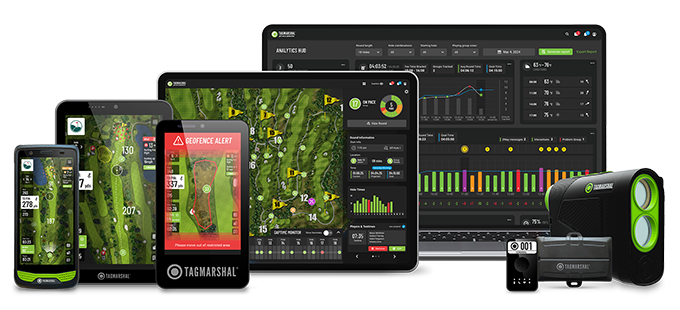
ABOUT TAGMARSHAL
Tagmarshal, the market leader in on-course optimization technology, provides courses with full, real-time operational oversight and reporting, giving golf operators the tools to manage pace and flow of play effectively, resulting in enhanced player experiences, increased efficiency through automation, and additional revenue generation.
Tagmarshal’s technology has collected over 100 billion data points from more than 95 million tracked and improved rounds of golf and has relationships with in excess of 900 partners, including Hazeltine, Whistling Straits, Baltusrol, Fieldstone, Bandon Dunes, The Old Course at St Andrews Links, Serenoa and Erin Hills.
Tagmarshal partners with several golf management groups, private, daily fee, public and resort courses, including 50 of the Top 100 courses, as well as many $40-$60 green fee courses, which are seeing excellent results using the system.
SOLUTIONS
 WATCH DEMO

