The Golf Cart GPS System and the 2030 Golf Ball Rollback Debate
Golf has been caught in an arms race for decades, while golf cart GPS system data can help courses understand its on-course effects. Modern golf balls, improved launch monitor fitting, and more sophisticated training have all helped players hit the ball farther than previous generations ever could. At the highest level, drives that were formerly seen as remarkable are now standard. Even recreational golfers have gained distance through improved technology and more efficient swings.
But with progress comes more questions. Historic courses have added back tees, moved hazards, and stretched layouts, while landlocked facilities don’t always have the means to expand. Golf’s governing bodies therefore began developing a revised ball-testing standard designed to limit future distance growth.
The position has changed since the initial plan was first announced. The initial proposal called for revised testing conditions to apply to elite competition in 2028 and the rest of the game in 2030. In June 2026, the USGA, the R&A, the PGA Tour and the DP World Tour confirmed that the current testing approach will stay unchanged until January 2030 while alternative solutions are examined. As such, the so-called unified rollback is an evolving policy debate rather than a finalized rule.
Whatever form the finalized changes take, manufacturers, players, and architects may need to adapt. Golf cart GPS system data can help courses measure how changing distances affect player movement, hazard interaction, and pace of play.
The Golf Cart GPS System and Why Golf’s Governing Bodies Want to Address Distance

The main concern isn’t exactly that golfers don’t enjoy additional distance; it is the fact that continued growth at the top of the game may slowly reduce the variety of skills needed to compete. If players can overpower doglegs, fly traditional landing hazards, and reach long holes with shorter clubs, we may see the strategic side of the game begin to disappear.
And of course, there is the question of sustainability. Lengthening courses can mean facilities need more land, irrigation, mowing, and maintenance. Historic and landlocked layouts also cannot just acquire more property to meet new expectations.
The idea behind distance regulation is to create a ceiling that protects shot-making and long-term course strategy. This is to slow the rate at which elite distance reshapes courses and drives more expensive operations.
The Legislative Shift: What is Planned for 2030?
The original revised Overall Distance Standard was announced in December 2023. With that schedule, balls used at the elite level would have been tested under new conditions from January 2028, with recreational golf following in January 2030. This phased plan was created so that manufacturers, facilities, and ordinary golfers have more time to adapt.
Industry feedback showed stronger support for a single implementation date, and professional tours questioned whether the proposed test would create a meaningful enough effect at the elite level. Those concerns led the governing bodies and major tours to reopen the discussion.
As such, no change will be made to the existing testing method before January 2030. That does not mean that the original 2023 specification will automatically take effect; the USGA and the R&A are using the intervening period to evaluate alternatives. Understanding this distinction matters.
Courses should prepare for the possibility of equipment change, but they shouldn’t rush into redesigning courses or making major capital investments based on an assumed outcome. The final approach may still differ from the rollback model first announced.
The Physics of The Pivot

Golf balls are examined using the Overall Distance Standard. The system uses controlled launch conditions to determine whether a ball travels beyond the set limit. Under the existing method, the ball is tested at a clubhead speed of 120 mph, a spin rate of 2,520 rpm, and a launch angle of 10 degrees.
The 2023 proposal would have increased test speed to 125 mph, representing approximately 183 mph of ball speed. Spin would have been reduced to 2,200 rpm, and launch increased to 11 degrees. The maximum distance would have remained 317 yards, with a three-yard tolerance.
The logic behind this is pretty clear. If a ball must stay within the same distance limit while being struck at a higher speed, it needs to be less distance-efficient. This can be achieved through aerodynamics, core construction, cover design, or combinations of different types of technology.
The challenge that engineers are faced with is trying to limit high-speed distance while keeping the feel, control, and short-game performance that seasoned golfers expect.
Golf Cart GPS System: The Manufacturer’s Dilemma

For ball manufacturers, there is a difficult challenge ahead. They must prepare for a possible new standard without really knowing what the final test is going to be, while also protecting the qualities that make a ball enjoyable for recreational golfers.
Golfers also really care about feel, greenside spin, flight stability, durability, and price. A compliant ball that performs poorly around the green will not succeed simply because it passes a test; players would be livid. The ball still needs to be fun to play with for amateurs while meeting compliance guidelines.
As such, research and development budgets are incredibly important and likely to shift towards finding a better separation between high-speed and moderate-speed performance. Engineers may experiment with dimple patterns, drag characteristics, multi-layer construction, and core response to reduce elite distance while minimizing disruption for ordinary golfers.
The market could offer several compliant options optimized for different swing speeds and performance priorities.
How Does This Impact Course Architecture?
Among the best arguments for controlling distance is that it may reduce pressure on classic golf architecture. Many historic holes were designed around specific landing zones, angles, and hazards. If players consistently fly those areas, the intended decisions become less relevant.
A distance ceiling could bring original bunkers, doglegs, and approach angles back into play. It could also help landlocked facilities stay strategically important without continually building new tees or acquiring additional property. A shorter ball will not automatically restore every course; strategy is also shaped by firmness, width, rough, green complexes, wind, and setup.
The most progressive approach is therefore not to assume that less distance solves everything. The idea is to combine equipment change with real player data, using evidence to understand where architecture, setup, and operations can be improved upon.
How Tagmarshal’s Golf Cart GPS System Supports Smarter Course Design
Tagmarshal is the leader in course optimization and golf cart GPS system technology. We are committed to making the lives of golfers and course operators easier through AI-powered tech and valuable insights into the game.
Heatmap Visualization

Tagmarshal’s Heatmap Visualization feature gives architects and operators a much clearer picture of how golfers actually move through a course. Golf cart GPS system tracking records the paths followed by carts and walking groups, and the system can show the aggregated geolocation data across a chosen day, week, or longer period.
This reveals heavily used routes, underused areas, and wear zones at risk of soil compaction. The same data can be used to support cart-path, setup, irrigation, and fertilizer decisions. As such, rather than guessing how reduced distance will change landing areas or traffic, architects can compare heatmaps across different periods.
Instead of reacting by simply adding or removing yardage, courses can make more precise decisions around hazards, angles, turf, and maintenance based on actual golfer behavior. Course designers can use Tagmarshal to optimize the course as a whole, using accurate, historical data.
Golf Cart GPS System: Distance, Waiting, and Pace of Play

Distance can also influence pace in less obvious ways. On reachable par 5s, driveable par 4s, and long holes with blind landing areas, golfers may wait because they believe the group ahead is within range. Even if the shot is unlikely, the chance of reaching the green can hold up the tee and cause delays.
A future reduction in outlier distance may change these decisions. Some holes that have become awkward one-and-a-half shot or uncertain waiting holes may become clear two- or three-shot strategies. This can decrease any forced waiting and help maintain better intervals.
Tagmarshal’s Pace Disruptors feature helps operators measure this. Using AI and machine learning informed by more than 95 million tracked rounds, the system identifies groups that are falling out of position and highlights urgent interventions on the Live Map. Courses can set their own standards, notify staff, and send alerts to golfers using 2Way devices.
All in all, this helps everyone keep a steady pace of play, and operators can compare data from before and after changes to make educated decisions.
Could Reduced Distance Mean Fewer Lost Ball Delays?
Longer shots tend to widen dispersion, meaning slightly offline drives can finish deeper in trees or heavy vegetation instead of manageable rough. These misses often slow play as golfers search or recover.
A reduced-distance ball may limit some of this, but the impact will vary. Tagmarshal data can be used to find problem areas, using heatmaps and pace tracking to point out exactly where delays occur. This allows for more precise adjustments to vegetation, mowing, and sightlines based on actual player behavior.
Recalibrate With 2Way Screens
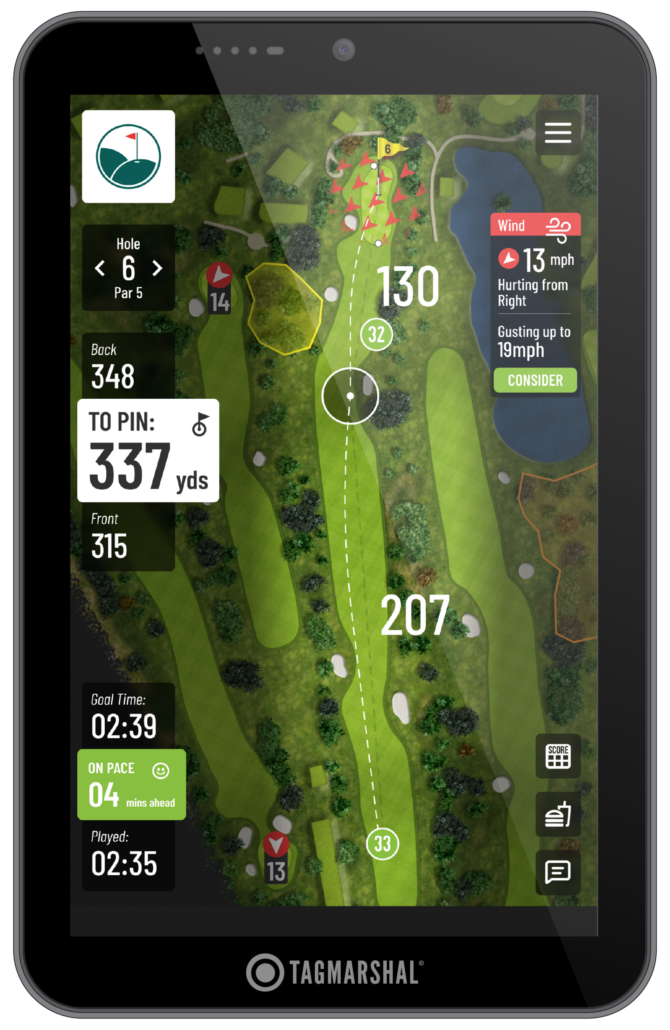
If new balls change carry distances, it means golfers may need to rebuild personal yardage baselines. A player who formerly carried a driver 250 yards or a 7-iron 155 yards may need to make new decisions surrounding club selection, lay-up strategy, and expectations around hazards.
Tagmarshal’s 2Way cart screens can support that transition by showing exact, to-the-pin yardage on every shot. Players can compare the distance needed with how the new ball is performing and make more informed decisions as they determine revised averages. The screens also show pace relative to course goal times, while operators can send updates on weather, pace, and geofence alerts to players without needing to manually intervene.
Tagmarshal’s golf cart GPS systems won’t calculate every player’s new carry distance automatically, but they do provide them with a reliable on-course reference. Over a few rounds, golfers can build a clearer understanding of how the ball performs.
What Courses Should Do Before 2030
As the final solution is still undecided, courses should generally avoid expensive speculation and instead focus on building reliable baseline data using tools like Tagmarshal’s golf cart GPS system.
As such, operators can track landing patterns, bottlenecks, and pace, and then compare results as new balls emerge to guide smarter setup and any potential renovation decisions.
Final Thoughts
The golf-ball rollback is not a simple countdown to a finalized rule, as the current testing approach will stay in place until at least January 2030 while the governing bodies and professional tours consider alternatives. Yet, the wider debate isn’t going anywhere; golf still needs to find the right balance.
For courses, the smartest response is preparation. Tagmarshal’s golf cart GPS system comes with features including Heatmap Visualization, Pace Disruptors, Live Map and 2Way screens, which can show how golfers actually move, wait and make decisions. As such, facilities can adapt to whatever 2030 brings while improving course design, pace of play, and the player experience as a whole.
Discover how Tagmarshal can improve your course and get in touch today!
OPTIMIZE YOUR DAILY OPERATIONS WITH TAGMARSHAL
Watch Demo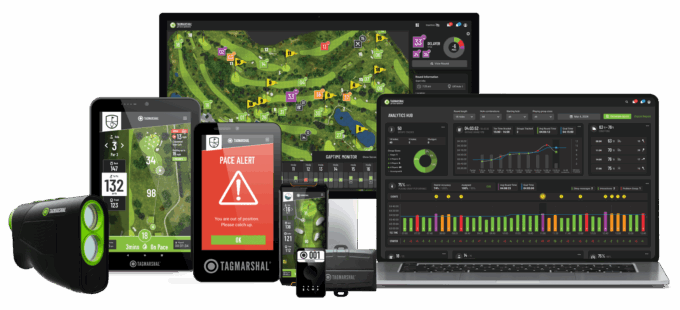
ABOUT TAGMARSHAL
Tagmarshal, the market leader in on-course optimization technology, provides courses with full, real-time operational oversight and reporting, giving golf operators the tools to manage pace and flow of play effectively, resulting in enhanced player experiences, increased efficiency through automation, and additional revenue generation.
Tagmarshal’s technology has collected over 100 billion data points from more than 95 million tracked and improved rounds of golf and has relationships with in excess of 900 partners, including Hazeltine, Whistling Straits, Baltusrol, Fieldstone, Bandon Dunes, The Old Course at St Andrews Links, Serenoa and Erin Hills.
Tagmarshal partners with several golf management groups, private, daily fee, public and resort courses, including 50 of the Top 100 courses, as well as many $40-$60 green fee courses, which are seeing excellent results using the system.
SOLUTIONS
 WATCH DEMO

