The Golf Cart GPS System and Golf Course Economics: The Costs and Revenue
In modern golf economics, the golf cart GPS system plays a major role. A golf course, from an outside perspective, looks effortless; perfectly trimmed fairways, smooth greens, and a welcoming clubhouse create an environment that fully embodies recreation and satisfaction. In truth, behind the scenes is a complicated and capital-intensive business operation. A golf course can cost tens of millions of dollars to build, and operating a course also means ongoing spending on maintenance, infrastructure, and labor.
To stay profitable, course operators need to balance expenses while getting the most out of revenue opportunities, and technology is helping to achieve exactly that. In particular, a modern golf cart GPS offers valuable operational data.
In this article, we’ll take a closer look at how golf courses operate financially, and where the golf cart GPS system fits into this model, highlighting how golf course tech has become a key part of the modern game.
Golf Cart GPS System: Startup Costs
The first step is to actually build the course. Let’s take a look at some of the main considerations.
Land Acquisition
A typical 18-hole golf course needs between 120 and 200 acres of land, depending on terrain and layout. Land costs will vary based on location, but are likely to be the largest initial expense in the course’s development. If the course is near tourist-heavy areas or suburban areas, the costs are likely to be much higher in comparison to rural areas.
Course Design and Planning
The course design and planning are an absolutely vital step. Golf course architects and designers are a very important part of the equation. They organize the routing of holes, green complexes, bunkers, and hazard placements. The costs surrounding design and planning may cost anything from thousands to upwards of a million dollars, depending on how complicated the project is.

Construction and Earthmoving
Courses don’t just appear, and turning a piece of land into a playable golf course involves extensive construction work. The major construction components that will have to be considered include land grading, earthmoving, drainage infrastructure, cart paths and bridges, bunker construction, and green shaping.
Earthmoving can be incredibly expensive. If the terrain is uneven, expect even higher costs.
Irrigation Systems
A healthy turf needs constant irrigation. A modern golf course must be reliant on complicated irrigation systems with underground piping, pump stations, and sprinkler networks. To install systems, it can cost anywhere from $500,000 to $2 million, depending on the size of the course and water requirements.
Turfgrass and Landscaping
Once construction is completed, the courses need to be seeded or sodded with turfgrass varieties appropriate for the region. This process includes fairway turf installation, green and tee construction, rough grass planting, and tree planting and landscaping. The costs for this can range from $500,000 to $1.5 million.

Clubhouse and Amenities
A golf course is incomplete without a clubhouse. In general, you can expect a clubhouse to have a pro shop, retail space, locker rooms, eating areas, bar areas, and event facilities. A simple clubhouse can cost up to $1 million, while high-end private clubhouses can exceed $5 million or more.
Total Development Cost
After all expenses are combined, you can expect the costs of a new golf course to be anywhere from $7 million to $25 million or more. Of course, this depends on the size and location. Building the course is just the beginning, whereas after that, the difficulty comes from operating it efficiently.
The Core Golf Course Business Model
Daily Fee Courses
A daily fee or public course generates most of the revenue from greens fees, cart rentals, and merchandise sales.
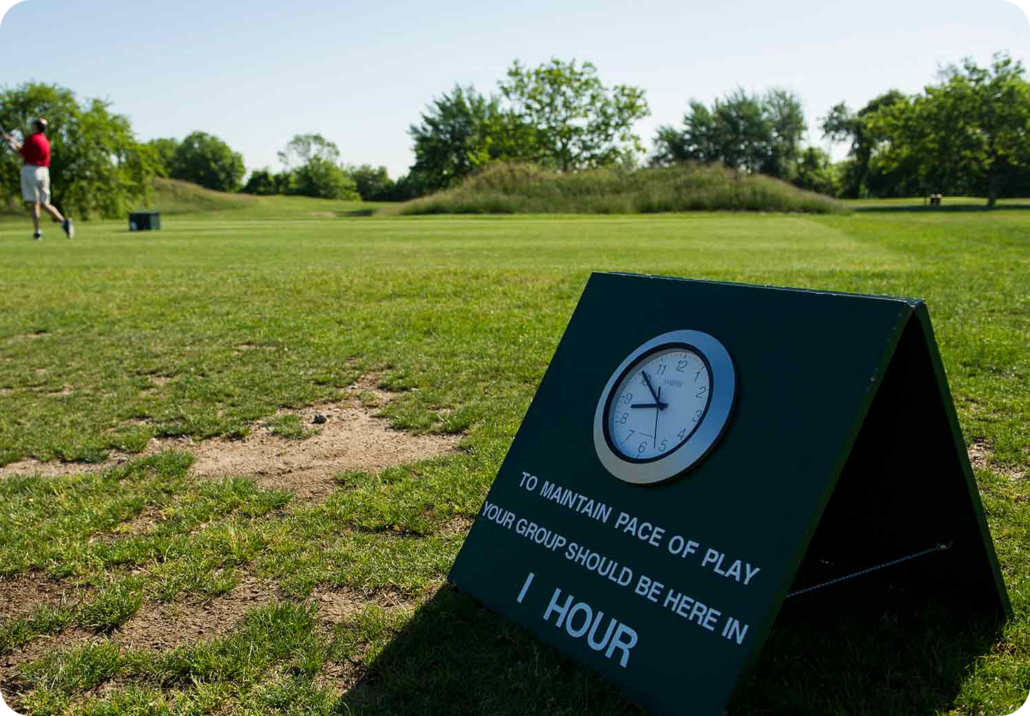
These facilities rely on high player volume to generate revenue. In this model, efficient course flow and pace of play are absolutely essential. A GPS system helps operators monitor player movement across the course and stop slow play.
Private Clubs
Private clubs tend to operate under a membership model. These courses generate most of the revenue from:
- Initiation fees
- Annual membership dues
- Food and beverage spending
- Club events and tournaments
Private clubs depend greatly on how happy members are and whether or not they’re able to retain them. This means that a consistent pace of play and high-quality service are of paramount importance. A golf cart GPS system can improve the overall experience by providing real-time pace tracking and full operational visibility.
Semi-Private Course
As you may have guessed, a semi-private course combines elements of both models. With courses like these, members receive preferred access while public golfers can book available tee times. This hybrid model helps courses diversify revenue streams, benefiting from the best of both worlds.
Golf Cart GPS System: Operation and Maintenance Costs

Maintaining a golf course is an ongoing and expensive process. Here are the key things to keep in mind.
Turf Management
The turf of a golf course is an incredibly important consideration and needs to be properly maintained at all times to meet player expectations. Turf management generally includes:
- Fertilizers and soil treatment
- Pest and disease control
- Aeration and topdressing
- Regular mowing and maintenance
This means courses need to spend money on both materials and skilled labor to make sure that the turf is properly maintained.
Irrigation and Water Management
Water is one of the highest operational costs for golf facilities. This means courses must maintain proper irrigation systems, carefully monitor water usage, and manage the drainage systems to make sure that the playing surfaces stay healthy.
Data insights from a golf cart GPS system can help course managers understand traffic patterns and quickly identify areas that may require less intensive maintenance.
Equipment Maintenance
Golf courses rely on specialized equipment such as greens mowers, fairway mowers, utility vehicles, and aeration equipment. For operators, maintaining and replacing this equipment is a significant capital expense.
Ground Crew Salaries
Even as the power of technology grows, the need for on-the-ground staff members is still as important as ever. A course maintenance team should generally include a golf course superintendent, assistant superintendents, equipment technicians, and grounds crew members.
Labor Costs Across The Golf Operation
Running a golf course needs more than just maintenance. Several staff members are needed to maintain a functional and smooth-running facility.
Golf Operations Staff
Golf professionals manage player services, lessons and clinics, and tournament organization. Many facilities employ PGA professionals and teaching instructors to improve the golf experience.
Clubhouse Staff
The clubhouse staff members include front desk staff, pro shop retail staff, and guest services. These employees manage bookings, merchandise, and customer support.

Food and Beverage Teams
Many golf courses operate full-service restaurants or bars. Food and beverage teams include chefs and kitchen staff, servers and bartenders, and event catering teams.
Administrative Staff
As is the case with all businesses, the administration staff is key. Behind the scenes, golf facilities rely on finance teams, marketing teams, and event coordinators. Modern-day technology, such as the GPS system, can help reduce labor demands by automating certain operational tasks.
Primary Revenue Streams
While golf courses come with high operating costs, they can generate revenue through a range of different key channels. Let’s take a look.
Greens Fees
For public courses, green fees are charged for each round played. This makes it one of the most consistent and important revenue streams for the club. Revenue increases when courses can fill more tee times, maintain a smooth pace of play, and avoid delays that disrupt the schedule. A golf GPS system can help a course optimize tee sheet flow and keep rounds moving efficiently.
Membership Dues
Private courses are mainly dependent on membership dues and initiation fees. A major part of maintaining predictable revenue is retaining members. As such, the importance of improving pace of play and overall service quality can play a massive role in member satisfaction.
Secondary Revenue Streams
Golf courses tend to diversify revenue through additional services. Common secondary revenue streams include pro shop merchandise sales, golf lessons and coaching, corporate tournaments and outings, event hosting and weddings, and cart rentals. This range of services boosts revenue while improving the golf experience as a whole.
Off-Course Add-Ons: Expanding Revenue Opportunities
Today, golf courses are increasingly expanding beyond traditional play. A few popular additions include indoor golf simulators, entertainment-driven practice facilities, upgraded driving ranges, social spaces, and event venues. These additions attract new audiences and help generate more revenue, even when golfers aren’t on the course itself.
Where Tagmarshal’s Golf Cart GPS System Creates Business Value
In 2026, with rising operating costs and growing expectations from players, golf technology has become a necessity for efficient golf course management. Tagmarshal’s GPS system gives course operators powerful data and operational tools.
Increasing Revenue Via Tee Sheet Optimization
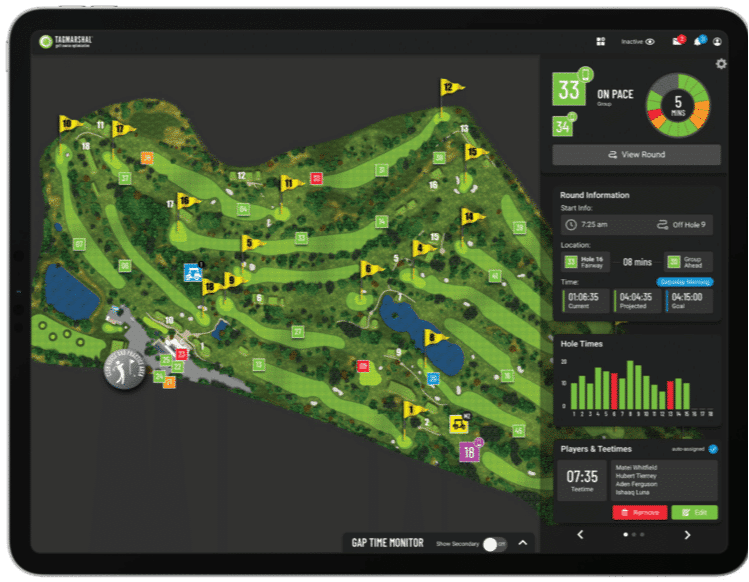
A golf cart GPS system can monitor player movement and pace of play, which allows operators to identify bottlenecks on specific holes, adjust tee time spacing, and increase the number of playable rounds per day. Even small improvements in pace can allow courses to add more tee times, which can generate significant new revenue.
Reducing Labor Costs Through Automation
The power of golf technology allows courses to take advantage of reduced labor costs. For example, Tagmarshal’s GPS system can automate certain operational tasks.
These include automated pace alerts that notify staff when groups fall behind schedule, live course maps that let staff members monitor play without constant patrols, and data insights that help managers and superintendents make smarter, faster decisions. This reduces the need for more staff members while improving efficiency.
Improving Retention at Private Clubs
At private clubs, there is a higher focus on delivering an exceptional experience. Tagmarshal’s golf cart GPS system improves pace consistency and communication with players, leading to smoother rounds and improved satisfaction levels. A satisfied member is far more likely to renew their membership and recommend the club to others.
Supporting Smarter Maintenance Decisions
Tagmarshal’s GPS system also provides operational and historical data to support maintenance planning. Course managers can analyze traffic patterns to identify high-wear areas, underused sections of the course, and opportunities to reduce mowing or irrigation. This naturally helps lower maintenance costs while preserving the course’s quality.
Running a golf course requires a significant financial commitment. From land acquisition and construction to ongoing expenses like maintenance, staffing, and infrastructure. To remain profitable, courses must turn to modern-day technology, which helps improve efficiency while delivering amazing player experiences.
Tagmarshal’s GPS system helps improve pace of play, optimize tee sheet capacity, reduce labor demands, and deliver valuable operational data. As participation in the sport continues to grow, golf facilities that embrace technology will be best positioned to thrive.
For operators looking to optimize operations and increase revenue, get in touch with Tagmarshal and book a golf cart GPS system demo today!
 WATCH DEMO
