Etiquette, Golf Cart GPS Systems, And The Unwritten Rules
They say that the more things change, the more they stay the same, and while golf cart GPS systems have certainly changed things, the etiquette surrounding golf largely remains the same. Golf, golf equipment, and golf tech like golf cart GPS systems have changed immensely over the last few decades, yet golf etiquette and its unwritten rules have remained just as, if not more, important than it has ever been.
Many people, particularly outsiders or those new to the game, may think that etiquette is a collection of arbitrary rules to merely honor traditions established by purists for the sake of it. But contrary to this misconception, etiquette and unwritten rules serve a much more practical purpose. It’s the unseen pillar that ensures every golfer has a good experience, regardless of how well or poorly they might have played.
Golf Cart GPS Systems: What Is Etiquette In Golf?

Etiquette can be described as a code of behavior, normally polite, within a specific group, society, or community. In golf, it carries more significance than merely somebody being courteous. The courtesy of golf etiquette extends beyond cordiality and serves a purpose, ensuring that all golfers share a common understanding that certain behaviors are in the best interest of the game, the course, and everyone else involved.
While most golf etiquette doesn’t formally form part of any official golf rules, observing them will long be remembered by your playing partners over any scores or ability. The main golf etiquette ‘rules’ revolve around respecting the players around you, managing pace of play, and honoring the golf course and its condition as you play. Here, we’ll take a closer look at each critical golf etiquette practice.
Golf Cart GPS Systems: General Etiquette
General etiquette entails all-around selfless conduct and consideration to your playing partners as well as everyone else you share the golf course with. From the moment you arrive at the course to holing the final putt, there are many broad written and unwritten dos and don’ts that every golfer should be aware of.
Arrival
Not arriving on time is considered inconsiderate and possibly even having a lack of respect for others. Arriving and teeing up later at the golf course puts unnecessary stress on your playing partners and puts pressure on the rest of the field to try to make up for lost time. Ensure that you’re at least 15-30 minutes early so that you can deal with the formalities in the pro shop and still have time for a quick warm-up.
What Happens In The Pro Shop
The pro shop is seen as the operational hub of the golf course, and how you present and conduct yourself here will set the tone for the rest of the round. After you arrive, check in quickly and confirm your tee time with the staff. You’ll also settle any fees here and receive important information about the day’s play.
At many modern courses, this is also where golf cart GPS systems are assigned or activated. Staff may briefly explain to you how to monitor pace, follow geofencing guidelines, or use the system for yardages and course updates. In many ways, proper etiquette in the pro shop is the foundation of what follows.
Using The Putting Green

The practice putting green is a shared space, and etiquette applies here as much as it does on the course. Arrive early, warm up efficiently, and stay aware of others getting ready for their rounds. Here are a few key tips to keep in mind:
- Avoid walking through another player’s putting line.
- Limit the number of balls you use during busy periods.
- Keep practice strokes controlled and brief.
- Stand clear of someone lining up a putt.
The goal is to prepare for your round without disrupting someone else’s.
Look After The Course
At some point in your golfing journey, you’re bound to take a divot, hit a ball mark on a green, or find a bunker. Good etiquette entails repairing or maintaining any blemishes you may have caused on the course. This means filling divots with soil from the sand bottles or sandbags provided by the golf club, repairing your ball marks on the green, and raking bunkers after you’ve hit your shot to ensure the fairest conditions for any players that come after you.
Pace Of Play Etiquette
Pace of play is one of the leading factors that determines whether golfers have an enjoyable experience on the golf course or a horrendous one. It is, thus, no surprise that countless etiquette practices have been introduced in an effort to promote faster play and, therefore, shorter rounds. When hundreds of people share the same course at any one time, even the smallest actions compound into making a big overall difference for everyone.
Why Ready Golf is The New Standard
Readiness goes a long way in the game of golf and, more specifically, in managing the pace of play. Traditionally, the person who is the furthest out from the hole plays their shot first. But with the induction of “ready golf” in recent years, things in this aspect have changed a fair bit.
Ready golf is an initiative that has been introduced to speed up play. The concept is that players can play their shot when they’re ready to do so, rather than having to wait strictly for the player furthest out to finish their shot. However, you must make sure nothing is in your way, it’s safe to play your shot, and that nobody else is in the process of playing their shot.
While other players in your group are setting up for a shot, you should also already be setting up to play yours, too. At this time, you can get your yardage, select your club, and take your practice swings, so that when your turn comes, you can just play your shot without having to rush your actual swing. So, always ensure that you’re ready to hit your shot when it’s your turn to play, or make sure that it’s safe to play when playing ‘out of turn.’
Keep Up With The Group In Front
There is a misconception shared by new and established golfers alike that an acceptable pace of play is merely to keep ahead of the group behind you, but this is not the case. The better objective in this instance is to keep up with the pace of the group ahead of you. If there is a gap opening between you, it means that you’re falling behind, and it’s time to move faster.
How Tagmarshal Helps

In this aspect of the game, golf cart GPS systems are invaluable to both courses and players. With its Live Map feature, Tagmarshal gives golf course managers full line of sight of the course at all times, while players can see whether they’re keeping the pace or whether they’re falling behind – long before actual noticeable gaps between any groups form. This enables an effortless and unobtrusive approach to pace of play management while saving countless labor hours to physically drive around on the course.
Data sets that these GPS systems track include the time spent per hole, broken down into tee box, fairway and green, gap intervals between groups, average round duration, and congestion hotspots. With this information, operators can adjust and refine the overall operational strategy.
The Unwritten Rules of Golf
There is also a collection of subtle, unwritten rules that players should be aware of. Let’s take a look.
Where To Stand When Someone Is Putting
Positioning on the green is another important aspect of etiquette. When a fellow player is putting, stand still, remain quiet, and position yourself out of their direct line of sight.
Avoid standing:
- Directly behind the hole
- Directly behind the player
- In their peripheral vision
- On or near their putting line
“Honors” On The Tee Box
Generally, the player with the lowest score on the previous hole has the “honor” of teeing off first. In recent years, with the rise of Ready Golf, strict adherence to honors is often relaxed in casual rounds. If the person with honors isn’t ready, it’s perfectly fine and encouraged for someone else to play first.
Tending Or Removing The Flagstick
Flagstick etiquette has changed over the last few years, especially after the rule changes allowing players to leave it in while putting.
If another player prefers the flag removed:
- Remove it carefully without damaging the hole.
- Place it gently on the green, away from putting lines.
- Avoid dropping it or letting it cast a shadow.
If tending the flagstick for someone putting from off the green, stand still, hold the stick upright, and step away promptly once the ball is struck.
Respect The Putting Line
While it may seem obvious, it’s important to repeat: never step in another player’s putting line, which is the direct path between their ball and the hole. Footprints and spike marks may subtly impact the way the ball rolls.
Golf Cart GPS Systems: Dress Code Etiquette
Golf attire has been rooted in tradition since its earliest days on the links of Scotland, where the game, as we know it, originated. Back then, clothing had a much more practical purpose in protecting players against the harsh Scottish elements. Men donned fitted coats, collared shirts, and knee-length knickers known as plus fours, combined with high socks, and women dressed in long skirts, blouses, and wide-brimmed hats.
Nowadays, the dress code for golf is far more relaxed than it used to be. Golf attire has evolved substantially from what could be described as formal to a much more smart-casual standard that feels more modern, comfortable, and accessible. The principles of the early days remain largely unchanged, though.

For men, this means:
- Collared golf shirts or neat mock-neck tops
- Tailored golf trousers or smart golf shorts (though shorts might not be acceptable at all courses)
- A belt
- Golf shoes
For women, it means:
- Collared shirts, sleeveless golf tops, or tailored blouses
- Golf skirts, skorts, dresses, or tailored trousers and shorts
- Golf shoes
Typically, things like jeans, cargo shorts, gym shorts, vests, and T-shirts are not allowed for men, while women should refrain from wearing overly short hems, athleisure, and casual leisurewear. When it comes to golf dress etiquette, most people agree it’s better to keep it conservative, especially at prestigious clubs or courses.
Golf Cart Etiquette and Tagmarshal’s Golf Cart GPS Systems
Golf cart operation, too, comes with its own set of dos and don’ts. Once again, when multiple carts share the same space, awareness, courtesy, and respect for both fellow players and the course itself become essential. As a course, managing the golf cart fleet can become seriously challenging, but with golf cart GPS systems like Tagmarshal, it’s one load less off the golf course manager and their team’s shoulders.
Carts should always be driven with care, just as one would drive any other vehicle. This means always driving at a safe speed and throwing caution to players, course staff, and other carts, especially in areas where there is increased traffic, like the clubhouse or halfway house. Follow all signage at all times and adhere to cart-path-only rules. It may be inconvenient at times, but the rule wouldn’t be in place if it weren’t for a good reason.
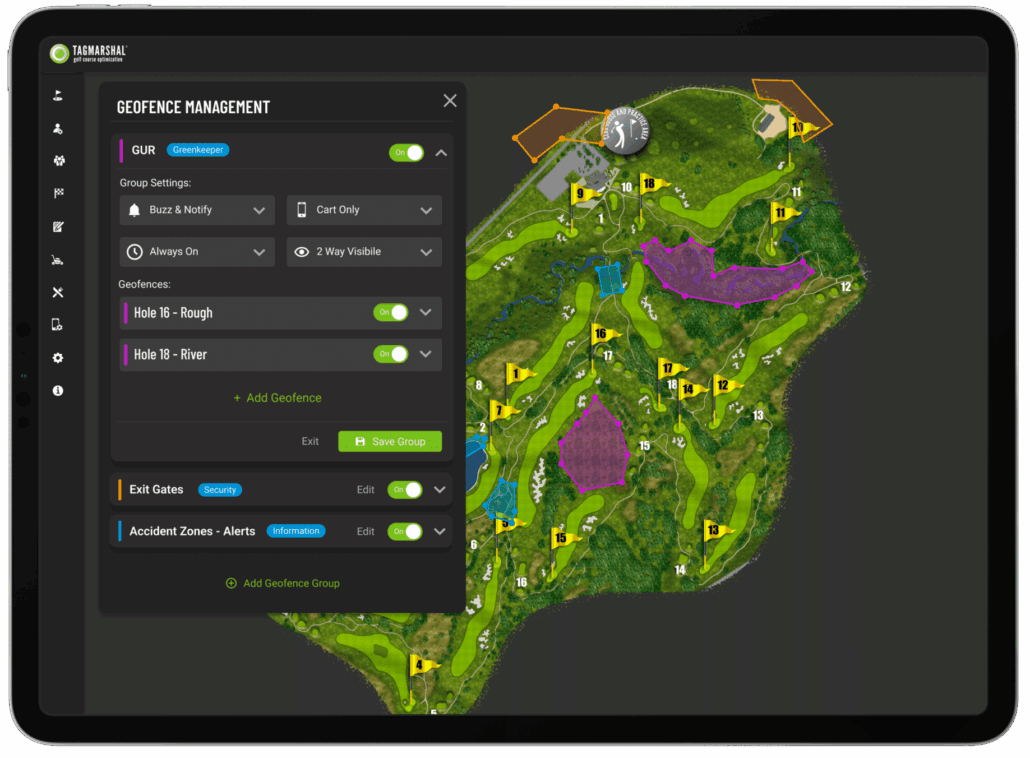
Care for the course is equally important. Carts should always be kept a reasonable distance from tees, greens, bunkers, and water hazards. These are all high-frequency areas, which would take their toll on the turf.
Geofencing: Protecting Restricted Areas
The Geofencing feature of Tagmarshal’s GPS systems solves this by creating digital boundaries at restricted areas and automatically alerting both players and course staff when a cart enters a no-go zone, even preventing them from heading further forward into the restricted area.

2Way Cart Screens: Real-Time Player Awareness
With Tagmarshal’s 2Way screens, players get real-time notifications about cart rules, restricted zones, and pace expectations. Rather than relying solely on signage, players receive immediate on-screen alerts that guide them on how to act on the course.
Live Map: Full Visibility
Tagmarshal’s Live Map gives operators a full overview of every cart and group on the course. Managers can monitor cart traffic, determine congestion spots, and take care of problems before they escalate. This helps make sure that cart rules are followed and allows staff to respond quickly when needed.
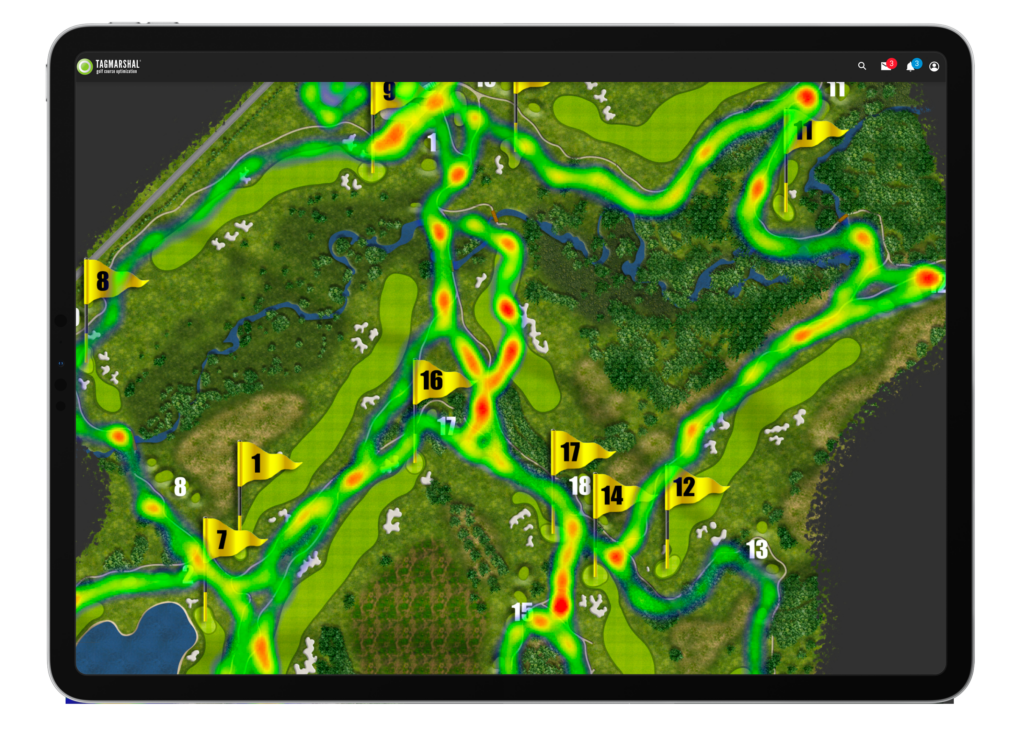
Heatmap Visualization
Tagmarshal’s Heatmap Visualization tool reveals where carts and players most frequently travel. Course superintendents can use this information to rotate traffic patterns, reinforce high-wear areas, and proactively protect vulnerable turf. With this, the best possible playing conditions are maintained.
Final Thoughts
Golf etiquette has always been about more than rules for the sake of rules. It’s about respecting fellow players, the course, and the traditions that make the game of golf what it is. Understanding everything from dress codes to golf cart practices helps create a smoother experience for everyone. When it comes to etiquette, a little awareness goes a long way in keeping the game welcoming, fair, and fun – whether you’re new to it or have been playing for ages.
If your course is looking to modernize pace management, reduce course damage, and improve operational efficiency on the bottom line, now is a good time to explore golf cart GPS systems and Tagmarshal. Get in touch with us today to help your course uphold etiquette standards while delivering a better experience for everyone involved.
 WATCH DEMO
