Golf Cart GPS Systems and Golf Rules: Tees, Fairways, Greens, and More
Golf, in all its glory, has a reputation for being filled with complicated rules, and modern-day technology like golf cart GPS systems is helping newcomers catch on. For many golfers, especially beginners, it can sometimes feel overwhelming, but once you understand where you are on the course, these rules make a lot more sense.
As every hole follows the same basic journey, each area comes with set rules designed to keep the game as fair as possible and the course in great condition. You start on the tee box, aim for the fairway, try to avoid the rough and hazards, and eventually find your way onto the putting green.
And with modern-day golf cart GPS systems making it easier for players to understand the course as a whole, it becomes easier to follow the rules. With systems like Tagmarshal, players can make smarter decisions and keep things moving at a good pace without the need for intervention from on-course staff.
When golfers combine basic rule knowledge with on-course technology, the game becomes a lot less stressful and more enjoyable. In this article, we’ll dive into everything you need to know about golf rules, as well as how golf cart GPS systems are making life easier for everyone involved.
Golf Cart GPS Systems: The Basic Structure of a Golf Course
Okay, before we get into the nitty-gritty of the rules, we need to understand the fundamental parts of a golf course.
Tee Box

The tee box is where each hole begins. You’ll notice markers that indicate where you’re allowed to tee your ball. Courses often have several sets of tees to suit different skill levels and distances.
Fairway
The fairway is the closely mown area found between the tee and the green. This is generally seen as the ideal landing zone for your tee shot, offering the best lies.
Rough
The rough borders the fairway and features longer grass. Shots from the rough tend to be more difficult because the grass can interfere with clean contact.
Bunkers and Penalty Areas
Bunkers, also known as sand traps, and water features fall into special categories with unique rules. Generally, the point of these areas is to challenge players, forcing them to add a sense of strategy to the game.
Putting Green
The putting green is the smooth, carefully cut surface surrounding the hole. The rules on the putting green are different from anywhere else on the course.
Understanding each area and the expectations and restrictions that come with it will keep you within the rules while helping you make well-informed strategic decisions. Now, let’s take a closer look at each area.
Tee Box Rules Golfers Need To Know
The teeing area may seem fairly simple, but even so, there are a few important rules to keep in mind.
First and foremost, your ball must be played from within the designated teeing area, defined by the space between the two markers, and extending two club lengths back. You can tee the ball up only when you’re playing from this area, which means once you’ve hit your first shot, you must play the ball as it lies.
If, however, you accidentally knock the ball off the tee while setting up, there is no penalty, and it doesn’t count as a stroke. In cases like this, you can just re-tee. If you make a stroke at the ball and miss completely, though, this will count as a shot.
In terms of order of play, you can go by whoever had the best score on the previous hole to go first.
Right from the get-go, golf cart GPS systems give players the full layout of the hole, including distances to bunkers, water, and the green. This full, aerial view of the course means you can choose smarter targets, avoid hazards and bunkers, and start the hole with a more well-informed, strategic plan.
Fairway and Rough Rules
Once your ball is in play, you need to remember arguably the most important principle of golf: play the ball as it lies.
After your ball is in the fairway or rough, you can’t do things like press down on the grass, move the ball, or alter any of its surrounding ground. You can, however, move loose objects and impediments like leaves, twigs, and stones out of the way. This can only be done in cases where it won’t cause the ball to move.

If your ball is embedded in its own pitch mark in the general area, including the fairway and rough, you’re entitled to free relief. This means you can lift, clean, and drop the ball within one club-length of the spot directly behind where it was embedded. You cannot move it closer to the hole, though.
In a similar fashion, if a shot leaves you in an impossible situation, such as behind a tree or deep in thick grass, you can declare it unplayable. This comes with a one-stroke penalty, but offers you options for relief, including dropping within two club lengths or going back to where you last played.
In cases like this, golf GPS systems can help with decision-making. This is because it provides accurate yardages to the green and hazards, helps golfers choose the right club, and stops golfers from hitting overly aggressive shots that lead to trouble in the rough. On the course, better decisions mean fewer penalties, better scores, and faster rounds for everyone.
Bunkers and Penalty Areas Explained
Hazards add an additional layer of challenge and strategy to the game, but they also have particular rules that must be followed.
Bunkers or Sand Traps

In a bunker, you cannot ground your club right in front of or behind the ball before your shot, or deliberately touch the sand with your club to test conditions. You also can’t test the condition of the sand with practice swings.
You can, however, remove leaves and stones provided it doesn’t move the ball. After playing a bunker, it’s good golf etiquette (and a written rule at some courses) to rake the sand to leave it in good condition for the next player.
Penalty Areas (Water Hazards)
In modern golf, water hazards are called “penalty areas”. They are marked with either red or yellow stakes or lines. If your ball enters one of these areas, you can play it as it lies or take relief with a one-stroke penalty.
The relief options usually depend on the color marking and include dropping behind the hazard or within a specified relief area.
GPS systems can be a major advantage here. Systems like Tagmarshal show precise distances to the front and back of bunkers and water. This helps golfers avoid risky shots that can lead to penalties and delays.
Understanding Penalty Strokes
While a penalty may sound intimidating, most golfers know when it’s the better strategic choice to take the penalty. Penalties can fall into a few common categories:
One-stroke penalties often occur when:
- Your ball is in a penalty area, and you take relief.
- You declare a ball unplayable.
- Your ball is lost or out of bounds (combined with stroke-and-distance).
A two-stroke penalty usually occurs from playing from the wrong place or any other serious rule breaches.
With penalties, the most important thing is not to panic, as penalties are built into the game to keep the competition fair. Understanding your relief options means you can move forward with a level of confidence instead of getting stuck in fear or confusion.
Some golf cart GPS systems, like Tagmarshal, provide clear hole layouts and pace of play reminders, which can help your group recover smoothly after a delay caused by a penalty.
Putting Green Rules
The putting green has its own set of unique rules. Here, you’re allowed to mark, lift, and clean your ball on the green. You can also repair ball marks and most damage on the putting surface, keeping the greens in good shape for everyone.
In modern golf, there is no longer a penalty if your ball hits the flagstick while it’s in the hole. Players can choose to putt with it in or out. You should, however, avoid stepping on other players’ putting lines and be mindful of where you’re standing. When it comes to golf etiquette, respect and awareness are at the top of the list.
Out-of-Bounds and Lost Ball Rules

Out-of-bounds (OB) areas are generally marked with white stakes or lines. If your ball goes out-of-bounds, the penalty is stroke-and-distance: you add a stroke and must play again from where you hit your previous shot.
In a case where your ball might be lost outside a penalty area, the smart move is to play a provisional ball before walking forward. That way, if the original ball is lost, you can continue with the provisional ball to save time.
As delays and bottlenecks need to be avoided, golf only allows three minutes to search for a lost ball. This helps prevent slow play on the course.
Smart decisions off the tee, often aided by golf cart GPS systems showing hole layout and trouble areas, can significantly reduce the number of balls hit into difficult search areas.
Golf Cart GPS Systems: How Tagmarshal Supports Rules and Pace of Play
Tagmarshal is the industry leader in golf course optimization, drawing on the full power of AI and machine learning and based on data from over 95 million tracked golf rounds. Our golf GPS systems provide courses with real-time operational oversight and reporting.
While understanding the rules is one part of a great golf experience, the other part is pace of play. This is what keeps the game flowing so everyone enjoys their round, and where course management platforms like Tagmarshal shine. Let’s take a closer look at how:

Improving Pace of Play
Tagmarshal’s GPS systems make use of real-time tracking so courses can monitor group positions on the course. If a gap starts to form or a group falls behind, staff can alert them via the system and assist. A proactive approach stops small delays from turning into long bottlenecks.
2Way Cart Screens and Hazard Awareness
Tagmarshal’s 2Way cart screens show visual hole maps and offer exact distances to hazards and greens. As such, golfers can choose safer targets, avoid penalty areas, and keep the game moving.
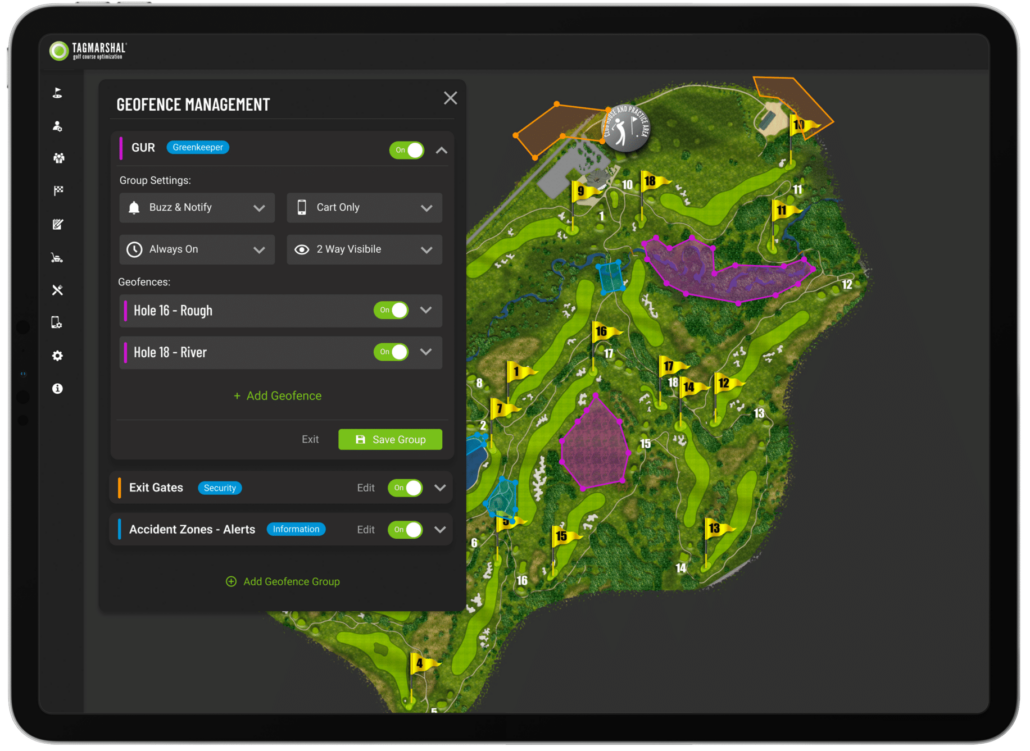
Geofencing for Rule Compliance
With Tagmarshal’s geofencing technology, courses can set “cart path only” zones or restricted areas. This helps to enforce local rules, protect course conditions, and guide golfers without constant staff intervention.
Data-Backed Course Management
As everything is tracked, courses can use the data gathered by Tagmarshal to gain insights into pace and player movement. This helps to support consistent, fair rule enforcement and a better operation as a whole.
Final Thoughts On Golf Cart GPS Systems and Golf Rules
While it may seem complex at first, golf rules don’t exist to intimidate players; they exist to keep things fair and protect the course. Understanding these rules helps to keep the game flowing for everyone.
Golf cart GPS systems are also transforming how golfers experience the course, offering more information that leads to smarter strategies and supports a consistent pace and flow of play. Courses using Tagmarshal are creating environments where golfers can focus on enjoying the game instead of worrying about what might go wrong.
Get in touch with Tagmarshal today to learn more about the benefits of our GPS systems!
OPTIMIZE YOUR ON-COURSE OPERATIONS WITH TAGMARSHAL
Watch Demo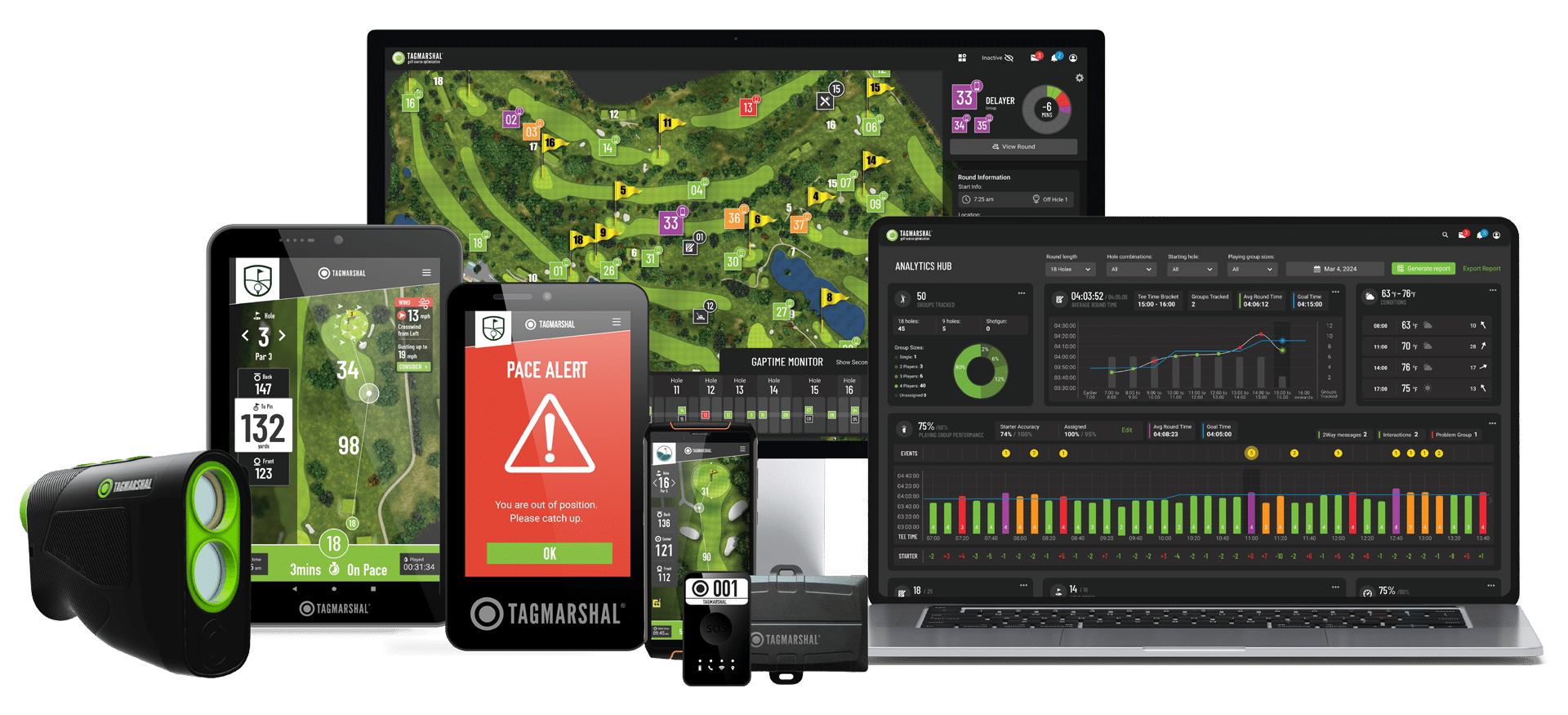
ABOUT TAGMARSHAL
Tagmarshal, the market leader in on-course optimization technology, provides courses with full, real-time operational oversight and reporting, giving golf operators the tools to manage pace and flow of play effectively, resulting in enhanced player experiences, increased efficiency through automation, and additional revenue generation.
Tagmarshal’s technology has collected over 100 billion data points from more than 95 million tracked and improved rounds of golf and has relationships with in excess of 900 partners, including Hazeltine, Whistling Straits, Baltusrol, Fieldstone, Bandon Dunes, The Old Course at St Andrews Links, Serenoa and Erin Hills.
Tagmarshal partners with several golf management groups, private, daily fee, public and resort courses, including 50 of the Top 100 courses, as well as many $40-$60 green fee courses, which are seeing excellent results using the system.
SOLUTIONS
 WATCH DEMO

