The Green Revolution: How The Golf Course GPS System Is Helping Modern Courses Tackle Sustainability
The golf course GPS system is changing the way that operators address sustainability. Golf is built around beauty: emerald-green fairways, smooth putting surfaces, manicured bunkers and magnificent landscapes that feel removed from the everyday bustle of life. The importance of sustainability, however, is more prominent than ever.
In an age of drought, rising utility costs, environmental regulation, and changing public expectations, golf courses are under increased pressure to stay green and maintain sustainability practices. A premium playing experience should not come at the expense of responsible land use.
As such, sustainability is a core part of financial resilience, community trust and long-term course management. The best facilities use turf science, smart irrigation, native landscapes, automation, and golf course GPS system data to manage resources with much greater efficiency.
In this article, we’ll take a closer look at golf’s green revolution and how golf course GPS systems are helping to change what a sustainable golf course looks like.
Golf Course GPS System: Why Sustainability Is A Priority
For decades, golfers would associate the quality of a course with uniform greenery, meaning that if a course looked lush from tee to green, it was assumed that it was well managed. This expectation placed pressure on operators to properly maintain large areas of turf, even in spaces that had little strategic value and were rarely used in play.
In an age where sustainability is a priority, that model is becoming difficult to defend. Water scarcity, labor shortages, chemical costs and climate pressure are forcing courses to think differently. Golf course facilities need to understand precisely where resources are needed and where the traditional “wall-to-wall green” approach can be replaced with sustainable maintenance efforts.
A sustainable course doesn’t mean abandoning conditioning, though. Golfers still want fair, consistent, and aesthetically pleasing playing surfaces. The difference is that modern operators are learning to separate essential playing areas from low-impact or out-of-bounds areas that can be maintained differently.

The Water Problem
As you may have guessed, water is one of golf’s most notable sustainability challenges. In drought-prone areas, courses need to carefully assess how much water they use, where it is applied, and whether every irrigated area actually contributes to the playing experience.
The issue goes beyond the fact that courses need water. Turf health, playability and safety are all dependent on responsible irrigation. The issue is that older maintenance models used to treat large sections of the course in the same way, even when player traffic and strategic value differed.
An efficient sustainability strategy needs to be precise and targeted. Courses are increasingly exploring drought-resistant turf, recycled water, rainwater harvesting, soil sensors, and smart irrigation systems that react to real conditions rather than a set schedule.
As such, operators don’t have to water every area equally; they can instead prioritize greens, tees, key landing zones, and high-stress areas. The less important turf can be converted to lower-input grasses, native vegetation, and naturalized rough. For course operators, this is a strong way to reduce waste while preserving the areas that matter the most to golfers.
Agritech to the Rescue
In terms of sustainability decision-making, turf selection is among the most important. Modern warm-season grasses, including bermuda grass and zoysia grass varieties, are often selected for drought tolerance, heat resistance, and traffic durability. In the right climate, grasses like these can help reduce irrigation demand without compromising on the laying experience.
Keep in mind there is no one-size-fits-all turf solution. A grass that performs well in one region may struggle in another due to shade, temperature, soil type, rainfall, or golfer traffic. Course operators therefore need to match turf choices to local conditions instead of just following whatever is trending at the time.
Smart irrigation is another massive part of sustainability. Soil moisture sensors, weather data, and digital irrigation controls allow maintenance teams to understand when turf needs water and when it doesn’t.
But irrigation is only one part of the story. A golf course also needs to understand how golfers and carts move through the property, and this is where a golf course GPS system adds incredible value.
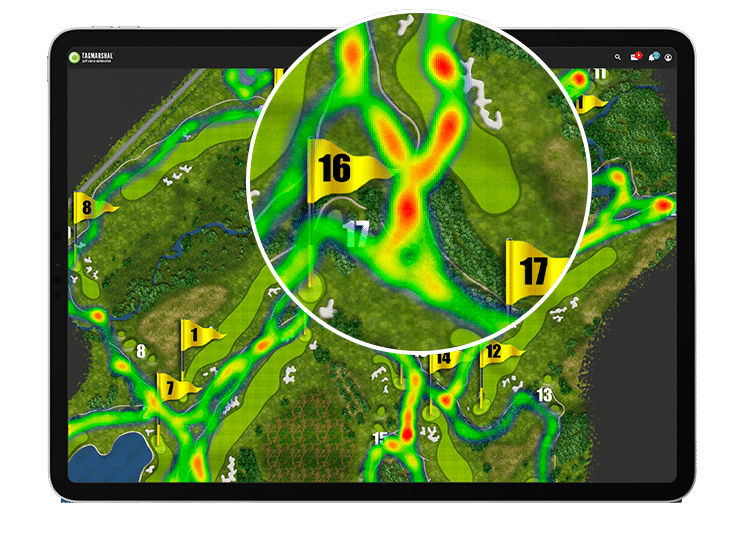
For example, Tagmarshal’s Heatmap Visualization feature helps operators identify which areas of the course receive the most traffic from carts and walking groups. These patterns will highlight which turf is under pressure, which routes are prone to compaction, and the zones that may need more targeted aeration, irrigation, or fertilizer.
As such, course operators can stop treating the whole course uniformly, and maintenance teams can instead respond to actual use.
Rewilding the Course
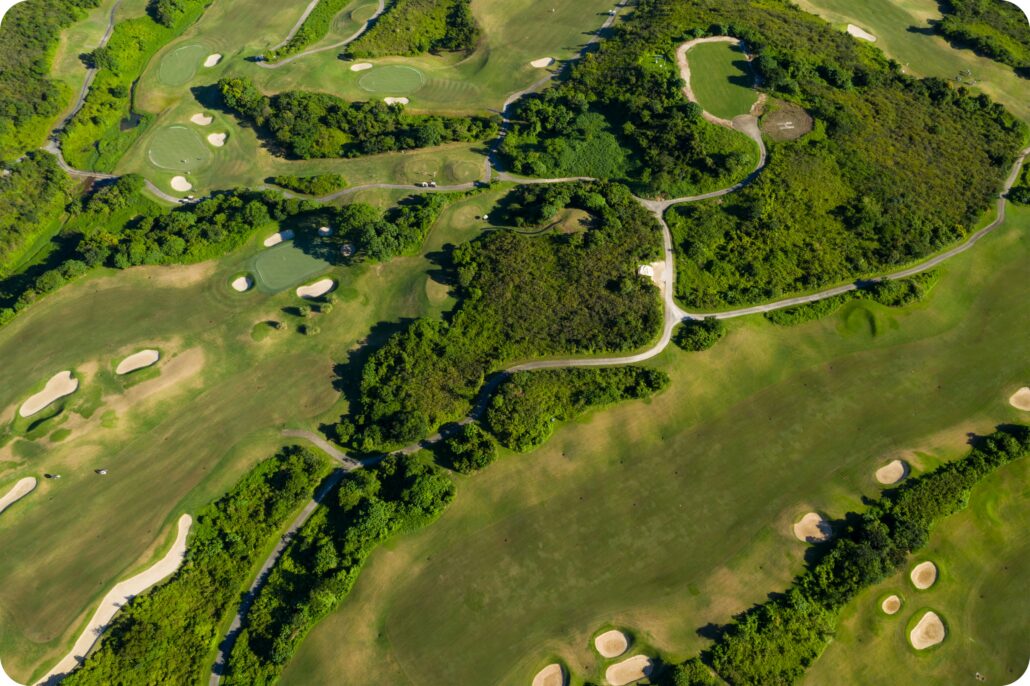
Another major sustainability trend is the move away from excessive manicured turf. Courses all over the world are rethinking secondary roughs, out-of-play zones, buffer areas, and returning them to native grasses, wildflowers, or wetlands.
Courses that take this approach can reduce mowing, irrigation, fuel use, fertilizer, and labor. It can also give a course a better visual identity. A property that reflects its local ecosystem will more than likely feel more authentic than a course forced into a generic green visual aesthetic.
Rewilding doesn’t mean that operators allow the course to become messy or unplayable. The most effective examples of rewilding are carefully planned. The primary playing areas stay clear and fair, while less-used areas are naturalized in a way that improves ecology and reduces inputs.
Native planting can support birds, pollinators, insects, and other wildlife. Wetlands can help manage stormwater, while dunes, grasslands, and woodland edges can be used as defining features of the course itself.
The most important thing is to choose the right areas. A golf course GPS system, like Tagmarshal, helps operators identify spaces that receive little traffic by using the Heatmap Visualization tool. This system reveals where golfers regularly enter sensitive areas, so staff has the data to improve routing, signage, or protective boundaries.
Golf Course GPS System: How Geofencing Can Protect Sensitive Areas
If golfers and golf carts continuously enter restricted areas, sustainability initiatives can be quickly ruined. Newly seeded turf, wet-lying holes, erosion-prone zones, restoration areas, and wildlife habitats must all be protected. While traditional signs and ropes can help, they are limited.
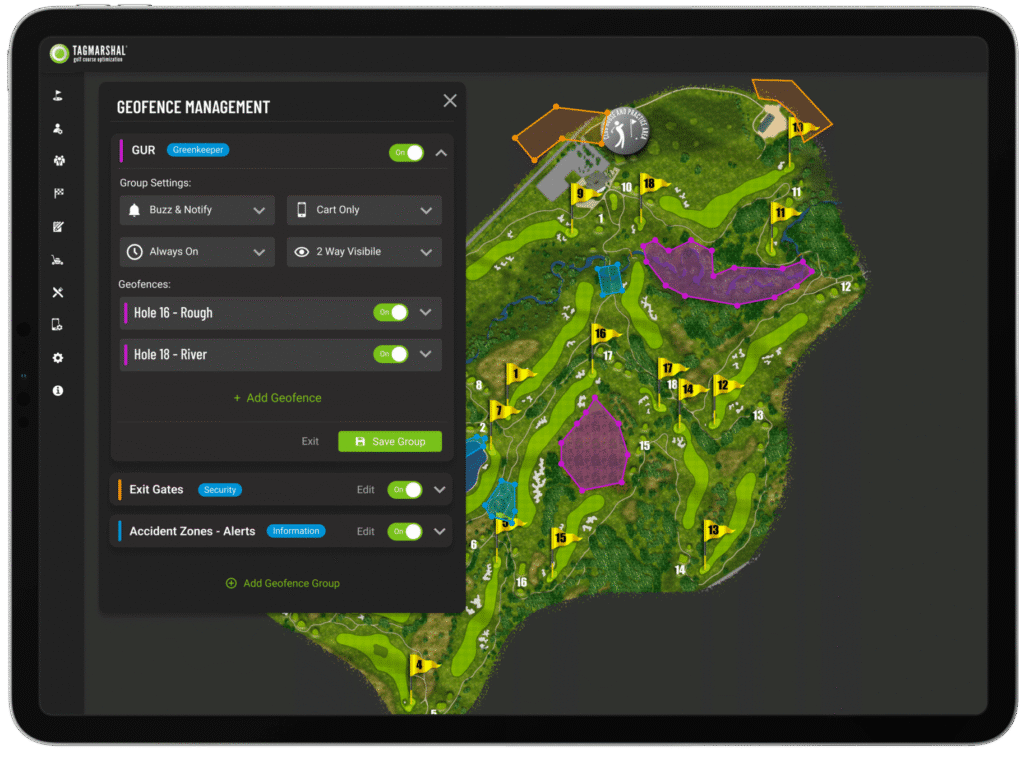
Tagmarshal’s geofencing tools make it much easier for courses to create digital boundaries around protected or prohibited areas. These can be adjusted for cart-path-only days, changing weather conditions, tournament setups, or temporary restoration work. If there’s a breach, alerts are sent to golfers and staff, which ultimately helps improve compliance without being fully reliant on manual patrols.
In the era of sustainability, this is especially important. It allows restrictions to be precise rather than uniform. As such, instead of applying cart-path-only rules across the entire course, operators can protect vulnerable areas while allowing regular access everywhere else. This creates a better balance between turf health and the player experience.
For high-risk areas, Tagmarshal comes with a Cart Stop function that adds another layer of protection by preventing carts from continuing into sensitive turf zones. A boundary control feature like this helps keep environmental improvements protected throughout day-to-day operations.
Live Map: Dynamic Protection for Weather and Turf Stress
Any sustainable course needs a level of flexibility. A course won’t experience the same environmental pressures every day. Rain, drought, heat, frost, tournament traffic, and maintenance schedules all change how the course should be managed.
A low-lying hole may need cart restrictions after rain, while a sandy, well-drained area may stay open. Newly seeded turf might need temporary protection for a few weeks, while a native restoration area may need stricter boundaries during establishment.
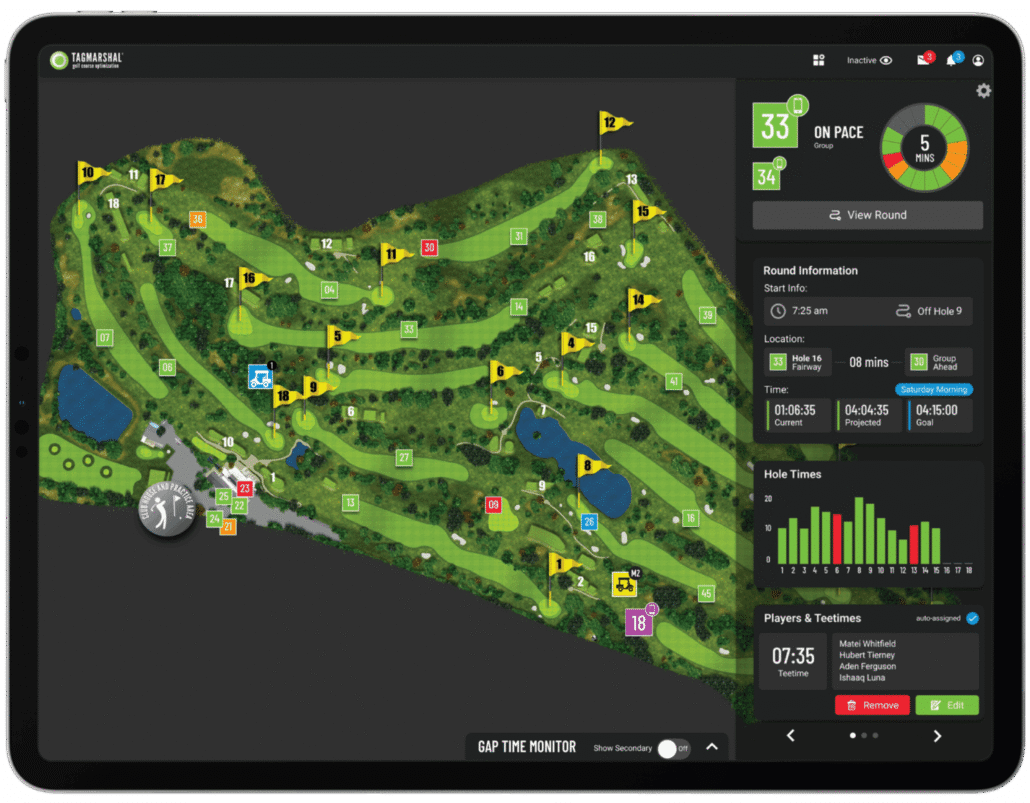
With Tagmarshal’s Live Map, operators gain much better visibility for making these decisions. This feature allows course teams to see where groups are in real time, which helps staff communicate restrictions, manage pace, and coordinate maintenance without unnecessary driving around the property.
As such, this reduces wasted labor and avoids overcorrecting. If only three holes are vulnerable, only those three holes need special protection; a better system for both the turf and the golfer.
Labor Efficiency
Tagmarshal’s Live Map and automation features also help with the issue of labor efficiency, which is an equally important part of sustainability. Many courses today are operating with smaller teams while still facing rising expectations from golfers and ownership groups.
Manual monitoring is a time-consuming process. Staff may find themselves driving around the course in search of slow groups, checking restricted areas, communicating weather updates, or trying to understand where problems are developing. And of course, this also adds labor costs, fuel use, and unnecessary movement around the property.
Tagmarshal’s automation features can help teams work more efficiently, allowing operators to set pace alerts, geofencing alerts and operational notifications so that staff can respond to specific issues instead of being on constant patrol. As such, employees can focus on higher-value work, including player service, maintenance planning and course preparation.
The Live Map also helps maintenance teams find gaps where work can be completed without having to disrupt any golfers. This reduces the need for after-hours labor and for smarter scheduling of tasks.
Case Studies in Eco-Luxury
Premium golf courses throughout the world have embraced sustainability practices. Today, high-end courses, resorts, and tournaments are using environmental practices as part of their identity.

Programs such as GEO Certified and the Audubon Cooperative Sanctuary Program give courses credible frameworks for improving environmental performance. These programs encourage better resource use, habitat protection, biodiversity planning, and long-term stewardship.
St. Andrews Links is one of the best examples of sustainability not hurting the identity of an historic venue. Considered the “Home of Golf” and one of the most famous destinations in the world, St. Andrews has become a beacon for sustainability in the industry. Its GEO Certified status reflects work across habitat restoration, rainfall capture for irrigation, reed-bed wastewater treatment, renewable energy generation and community-based coastal protection.
Another strong example is Carnoustie Golf Links, a world-renowned Open Championship venue with GEO Certified status since 2013, and re-awarded GEO accreditation in 2024. Its sustainability work includes biodiversity research, tree-planting projects, digital monitoring, golfer education, community engagement and progress toward net-zero carbon. Carnoustie Golf Links also has a direct link with Tagmarshal, using Tagmarshal data to support pace, wear-pattern management, hole setups, and operational efficiency.
Bandon Dunes Golf Resort is another premium property and Tagmarshal partner where environmental sustainability is central to the experience. The resort built its reputation around the natural ruggedness of the Oregon coastline. All six of its courses have achieved Certified Audubon Cooperative Sanctuary status, and the resort highlights habitat protection, native vegetation, bird-box installation, documented bird species, low-input fescue management, and responsible water use as part of its sustainability approach.
A golf course GPS system like Tagmarshal can help premium courses identify high-traffic zones, protect sensitive areas, manage wear patterns, and support targeted maintenance zones.
How Golf Course GPS System Data Supports Greener Operations
Golf course GPS system data gives course operators an easier and practical way to turn sustainability goals into daily decisions.
Heatmap Visualization shows where the course is overused and underused. High-traffic zones can receive more focused maintenance, while low-traffic areas may be candidates for reduced mowing or naturalization.
Geofencing helps protect sensitive turf, wetlands, restoration areas, and newly seeded zones. Breach alerts and tracking records give staff better accountability and help determine where golfers may need clearer communication.
Automation reduces unnecessary manual monitoring. Staff can respond to real-time alerts rather than seeking out issues across the property.
Historical tracking can also support design and renovation decisions. Architects and operators can use real player movement to examine cart paths, routing, tee placement, high-stress zones, and opportunities for naturalized areas.
Final Thoughts: The Golf Course GPS System is Helping To Make Golf Greener
Golf’s long-term survival depends on adapting to environmental pressure without losing the playing experience that makes the sport special. The best courses use better design, smarter agronomy, targeted technology and real operational data to manage land more intelligently.
Today, sustainability is seen as a measure of good course management, and courses that embrace it can reduce waste, protect turf, support biodiversity, improve community perception and strengthen long-term resilience.
Tagmarshal helps operators understand how golfers move, where pressure builds, and which areas need protection. Discover how Tagmarshal can help your course protect turf, reduce unnecessary resource use, and make data-backed decisions for a more sustainable future!
BECOME A GREENER OPERATION USING TAGMARSHAL
Watch Demo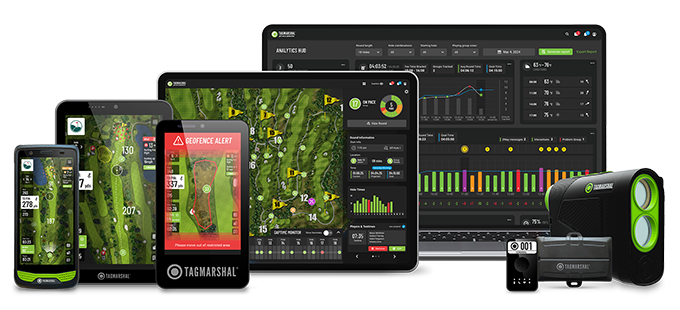
ABOUT TAGMARSHAL
Tagmarshal, the market leader in on-course optimization technology, provides courses with full, real-time operational oversight and reporting, giving golf operators the tools to manage pace and flow of play effectively, resulting in enhanced player experiences, increased efficiency through automation, and additional revenue generation.
Tagmarshal’s technology has collected over 100 billion data points from more than 95 million tracked and improved rounds of golf and has relationships with in excess of 900 partners, including Hazeltine, Whistling Straits, Baltusrol, Fieldstone, Bandon Dunes, The Old Course at St Andrews Links, Serenoa and Erin Hills.
Tagmarshal partners with several golf management groups, private, daily fee, public and resort courses, including 50 of the Top 100 courses, as well as many $40-$60 green fee courses, which are seeing excellent results using the system.
SOLUTIONS
 WATCH DEMO

