Golf Course GPS Systems: Overcoming the Golf Industry Labor Shortage With Technology
Golf course GPS systems are becoming increasingly important as facilities look for smarter ways to manage labor pressure. Across the golf industry, operators are being asked to deliver more, despite there being a labor shortage. Courses are busy, golfers expect a smooth and enjoyable experience, and maintenance standards are high. Yet, many places are struggling to hire and retain enough skilled staff.
This can impact almost every part of the operation. Agronomy teams need enough staff to maintain greens, fairways, bunkers and rough. Pro shop teams need to manage check-ins, tee sheets, player questions and daily communication. On-course marshals and player assistants need to monitor pace, respond to bottlenecks and support the player experience. Food and beverage teams also need to handle peak periods at the turn without slowing play.
The solution is not to entirely remove the human side of golf; this would be counterintuitive. Hospitality, course expertise, and personal service are still very important. Courses, however, also need tools that help smaller teams work more efficiently. The right technology gives staff better visibility, automates repetitive tasks, and helps teams respond to the right issues at the right time.
At Tagmarshal, we’ve designed our golf course GPS systems to help bridge the labor gap by turning guesswork into data, manual monitoring into automated alerts, and reactive operations into proactive course management.

Golf Course GPS Systems: The Cost of Understaffing
Golfers can feel it when a course is understaffed. A few small operational issues can easily lead to a weaker experience overall.
The most obvious example is pace of play. If there are fewer player assistants on the course, delays may develop before anyone notices. One slow group can fall out of position, create a gap, hold up the groups behind them, and affect the flow of the entire field. By the time a complaint reaches the pro shop, the issue may already have escalated and become far worse.
Course conditions can also suffer. Maintenance teams under labor pressure have less time for bunker work, rough management, divot repair, drainage improvements, and presentation tasks. An understaffed course is naturally going to struggle to keep up with maintenance requirements, which can undermine the entire experience for golfers.
Service visibility also suffers. Beverage carts are harder to track, golfers receive fewer proactive updates, and staff members have less time to check in with groups. This is why labor shortages are not just a staffing problem. They become an experience problem, a maintenance problem, and a revenue problem.
Why Hiring More People Is Not Always Enough
Adding staff isn’t always the right answer. Many operators already face wage pressure, limited applicant pools, and struggle to find qualified team members. Even when a course can hire more people, the payroll still needs to be justified. Staff should not be spending hours on tasks that golf tech can handle more efficiently. A player assistant driving around the course looking for problems won’t always work.
By the time they find the problem, the delay may already have affected several groups. This makes traditional course monitoring more inefficient, especially when courses are trying to stretch smaller teams across the pro shop, the first tee, the field, F&B operations, and maintenance priorities.
The courses that manage labor pressure best will be the ones that make every staff hour more valuable. Instead of just adding more people, operators need to give existing teams better visibility, better data, and better tools. That allows staff to spend less time searching for problems and more time solving them.
Automation in the Pro Shop
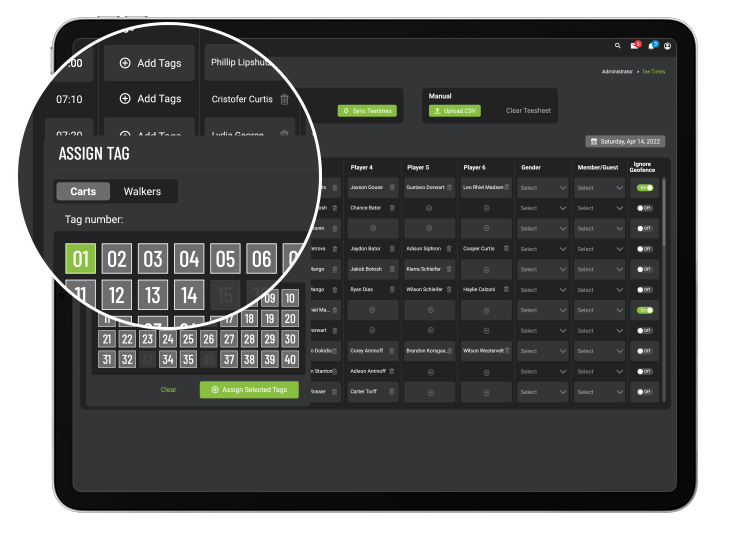
Automation is changing how golf courses operate. Self-check-in, automated tee sheet tools, digital communication, GPS-connected carts, and operational dashboards help teams lessen manual work.
In the pro shop, automation reduces repetitive and sometimes boring administrative tasks. Tagmarshal’s Tee Sheet Auto-Assignment pulls in tee sheet data and automatically assigns tracking devices to player names as groups exit the first tee. This saves time for starters and staff who would usually need to manually match devices, groups, and tee times.
Automation is also changing maintenance. Automated mowing is a useful example because it shows how golf technology can support skilled staff. When autonomous mowers handle repetitive cutting, greenkeepers can spend more time on detail work such as bunkers, divots, drainage, and green management. The result isn’t less care; it’s more time for the work that most affects course quality.
The same principle applies to golf operations. If software can monitor pace, trigger alerts, track starting accuracy and display group locations, staff have more time to speak with players, manage the shop, support events and solve real problems. Automation helps remove unnecessary manual work.
Golf Course GPS Systems: From Reactive to Proactive Course Management
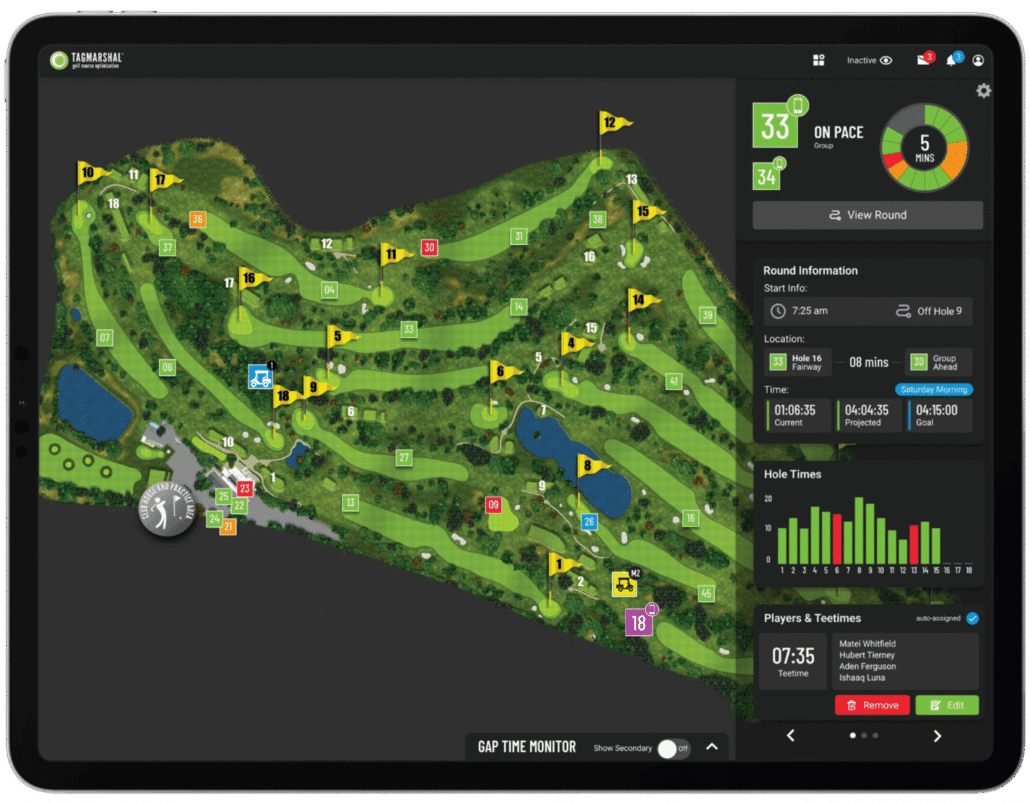
Traditional marshaling is reactive. A ranger drives the course, looks for slow groups, and responds when something seems wrong. The model depends on timing and luck. The player assistant may be on the wrong hole when a delay begins. A group may be out of position for several holes before anyone notices. Staff may intervene only after complaints have already begun.
As you may have guessed, this isn’t the most efficient use of payroll, particularly when teams are already stretched. Tagmarshal’s golf course GPS systems help courses move from reactive player assistance to proactive field management. Our Live Map gives operators real-time visibility of each group on the course, which lets staff see who is on pace, who is falling behind, who is being held up, and who is causing delays.
This is an important distinction. Not every out-of-position group is responsible for the problem. Sometimes they are waiting on the group ahead. Sometimes the delay is caused by a bottleneck on a specific hole. Real-time visibility helps staff members respond efficiently.
Automated alerts make this even more powerful. Managers can set up pace-based thresholds, so staff are notified when a group falls a certain number of minutes out of position. Instead of patrolling aimlessly, player assistants can be sent out more selectively when intervention is needed. This naturally improves efficiency across the board.
Tagmarshal: A Powerful Digital Tool
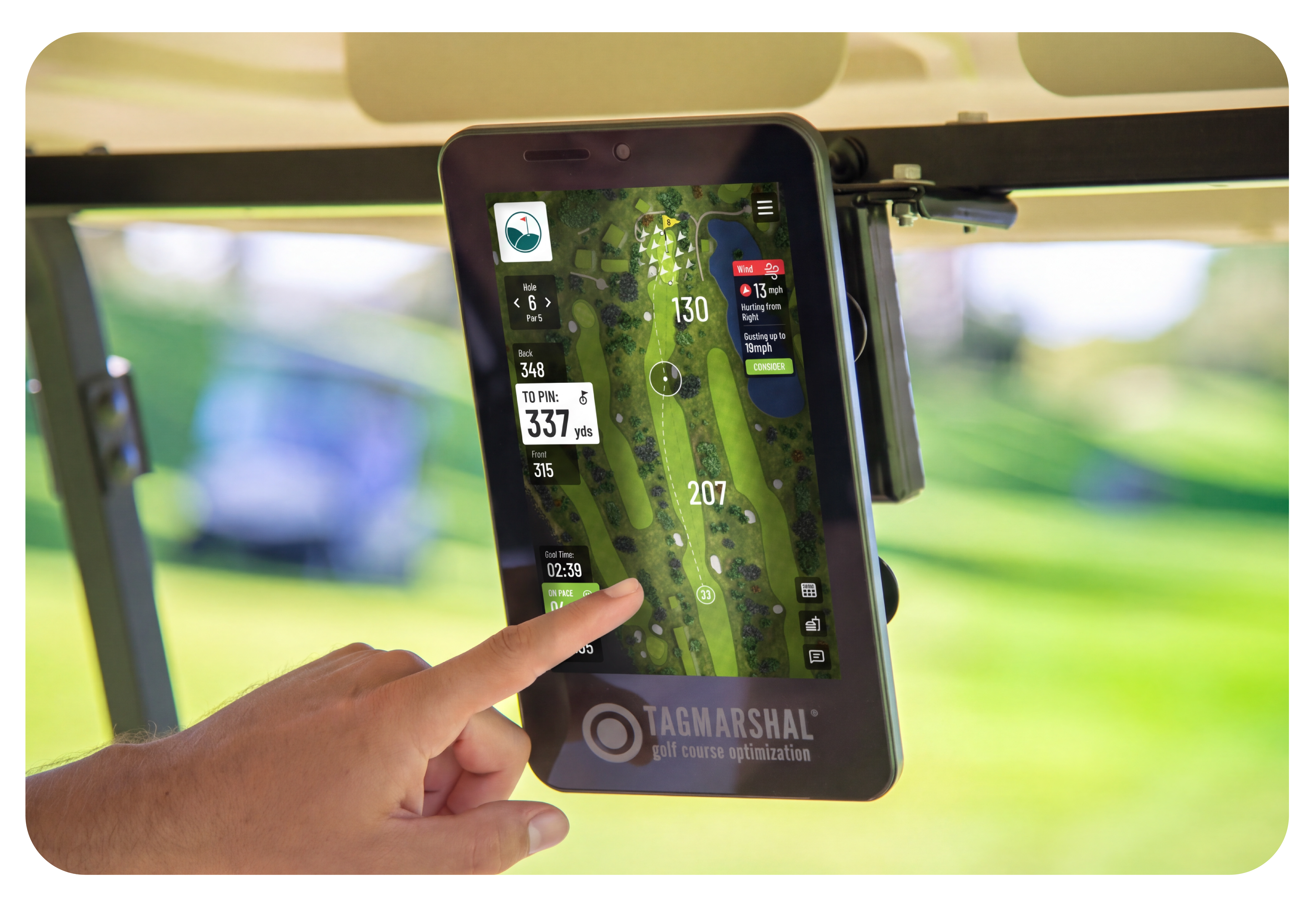
Tagmarshal does not replace the people who create a great golf experience. Tagmarshal gives them the visibility, data, and communication tools they need to manage the course more efficiently.
A single staff member in the pro shop can monitor the field through the dashboard while still taking care of other responsibilities. They can see where groups are, how the course is flowing, and whether or not intervention is needed. If a bottleneck begins to form, staff do not have to search for it. The system helps identify the issue, which means the team can respond more effectively.
For courses using Tagmarshal’s 2Way screens, staff can communicate with players. Groups can receive pace prompts, weather alerts, F&B messages, or other important information without requiring a staff member to drive out to the group for every interaction. The team remains involved, but the work is more targeted.
Golf Course GPS Systems: Data as the New Staff Multiplier
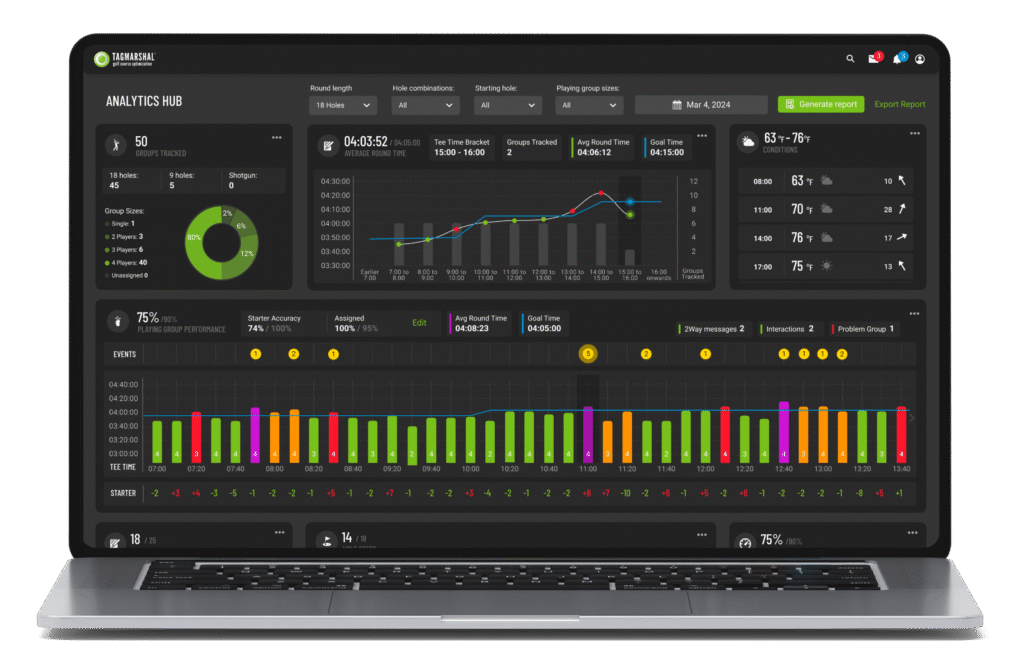
A course can’t improve what it can’t measure. That is why data is so important in a labor-constrained environment. Golf GPS systems gather information that would normally be difficult to track manually. These systems can monitor group movement, pace against goal time, starting accuracy, hole-by-hole delays, geofence breaches, and player communications.
Managers can then make better decisions across the season. If a course sees repeated delays on a particular hole, it can investigate the cause. If groups are regularly starting late, starter processes can be adjusted. If certain time blocks result in slower rounds, staffing or tee-interval decisions can be analyzed.
Tagmarshal’s Analytics Hub brings this information together to help teams spot patterns. Playing Group Performance, Starter Accuracy, Hole Stats, and Pace Distribution all help operators understand where labor should be focused.
Data improves player communication. Pace conversations become more neutral and fact-based because staff can reference actual round information, Track Map data, logged interactions, and pace against goal time.
Modernizing On-Course Hospitality
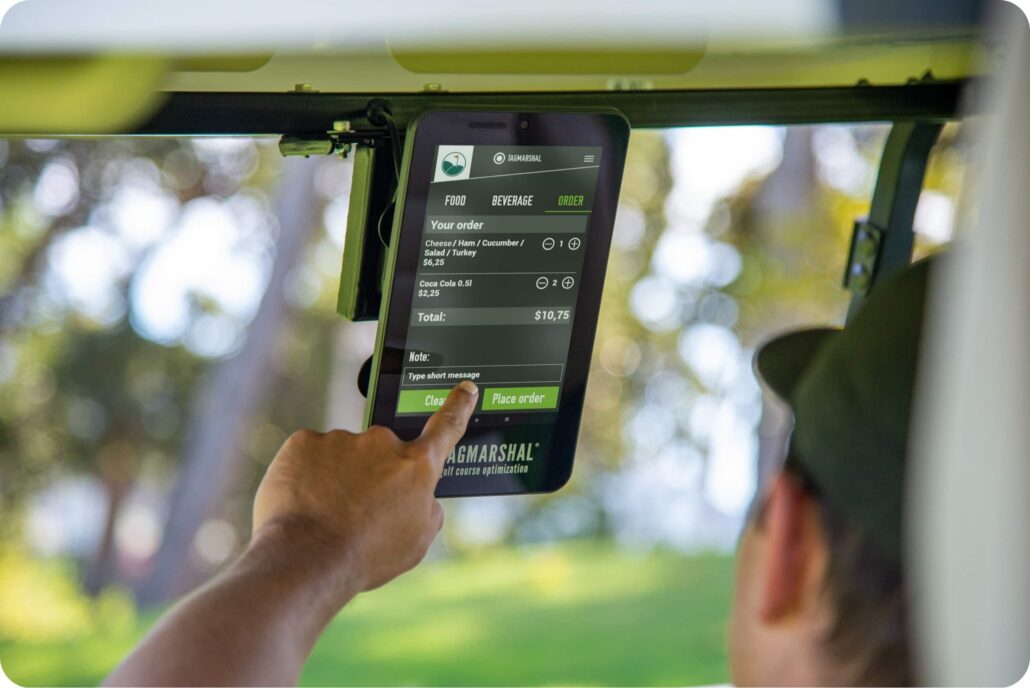
Labor pressure also impacts food and beverage operations. The turn can quickly create a bottleneck if a bunch of groups arrive simultaneously and the kitchen or halfway house lacks sufficient staff.
A traditional F&B model waits for golfers to arrive before they decide what to order. That creates pressure on staff and can slow the transition to the back nine. With Tagmarshal’s 2Way screens, courses can prompt F&B orders before players reach the halfway house or clubhouse.
Automatic prompts can trigger at strategic locations using golf GPS technology. Players can complete orders before arrival, and those orders can be fed through to kitchen staff so they can prepare ahead. This improves workflow, reduces pressure at the counter, and helps protect pace of play.
Golf Course GPS Systems: Supporting Agronomy Teams Without Replacing Greenkeepers
Agronomy teams are among the hardest hit by labor pressure. Skilled maintenance work is essential, but many teams are asked to maintain high standards with fewer people and tighter budgets.
Golf course GPS systems assist by minimizing repetitive tasks and increasing visibility. Autonomous mowers, GPS sprayers, and improved maintenance planning allow staff to concentrate on key areas such as greens, tees, fairways, bunkers, and overall course presentation.
Tagmarshal also supports agronomy teams through geofencing, Live Map visibility, and Heatmap Visualization. Geofencing helps prevent carts from entering protected or restricted areas. Preset geofence groups can be used for cart-path-only days, adverse weather, or sensitive turf conditions, while alerts notify players and staff regarding breaches.
Heatmap Visualization helps teams see where players and carts actually travel. High-traffic zones, visible wear, and areas at risk of compaction become easier to identify. This allows maintenance to become more targeted.
Final Thoughts: Overcome Labor Shortages With Tagmarshal
The golf industry labor shortage won’t disappear overnight. Courses will keep facing pressure around hiring, wages, retention, and staff productivity. Golf course GPS systems help smaller teams manage pace, monitor the field, protect turf, coordinate hospitality, and make data-backed decisions.
At Tagmarshal, we help courses do more with the team they already have. We help golf courses bridge the labor gap with real-time tracking, Live Map visibility, automated pace alerts, geofencing, 2Way communication, F&B prompts and Analytics Hub reporting.
Learn more about how our golf course GPS systems can help your team spend less time searching for problems. Get in touch with our team today or book a Tagmarshal demo for your course.
SEE OUR SYSTEM IN ACTION
Watch Demo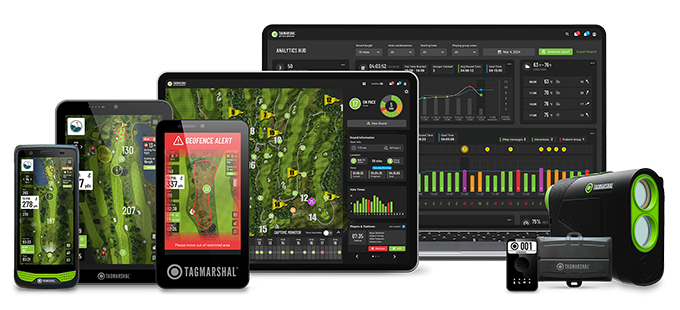
ABOUT TAGMARSHAL
Tagmarshal, the market leader in on-course optimization technology, provides courses with full, real-time operational oversight and reporting, giving golf operators the tools to manage pace and flow of play effectively, resulting in enhanced player experiences, increased efficiency through automation, and additional revenue generation.
Tagmarshal’s technology has collected over 100 billion data points from more than 95 million tracked and improved rounds of golf and has relationships with in excess of 900 partners, including Hazeltine, Whistling Straits, Baltusrol, Fieldstone, Bandon Dunes, The Old Course at St Andrews Links, Serenoa and Erin Hills.
Tagmarshal partners with several golf management groups, private, daily fee, public and resort courses, including 50 of the Top 100 courses, as well as many $40-$60 green fee courses, which are seeing excellent results using the system.
SOLUTIONS
 WATCH DEMO

