Maximizing Flow with A Golf Cart GPS System: The Rise of 9-Hole and Alternative Formats
The golf cart GPS system is becoming a key part of operations, as modern course operators look for smarter ways to manage 9-hole rounds, twilight play, short courses, and alternative formats without disrupting play. Many players are dealing with a lack of time due to busy workdays, family commitments, shorter leisure windows, and less appetite for committing four or more hours every time they want to play.
The shift is helping 9-hole rounds, twilight golf, par-3 courses, short courses and other alternative formats become more popular. These options give beginners a less intimidating entry point, families a more accessible way to play, and regular golfers another way to fit the game into a normal weekday.
For course operators, this creates an exciting opportunity. Shorter formats can unlock late-afternoon revenue, fill quieter time blocks, and attract players who may not have booked a full 18-hole round. Of course, flexibility also creates some complexity. Once 9-hole players, 18-hole players, league groups, and twilight golfers are using the property in different ways, it can become tough to manage the tee sheet.
This is where the golf cart GPS system becomes an incredibly valuable tool. At Tagmarshal, our golf cart GPS system is designed to help operators understand where players are, how groups are spaced, and when the field has room for alternative-format play. With Live Map visibility, Gap Time Monitor, Heatmap Visualization, and historical course data, course operators can provide flexible golf opportunities without creating any avoidable bottlenecks.
In this article, we take a closer look at how courses can maximize flow with a golf cart GPS system, as well as how offering alternative formats can work in a course’s favor.
Golf Cart GPS System: The Economics of Shorter Golf

Shorter golf works because it lowers the commitment needed to play. A golfer who can’t really fit in 18 holes after work may still have time for nine. A beginner who feels nervous about a full round may be willing to try a short loop. A parent may bring a junior golfer for a shorter, more relaxed experience. A senior player may prefer nine holes because it fits their energy and schedule better.
Course operators should recognize that these players represent a real demand. They are not necessarily replacing full-round golfers. In most cases, they are adding rounds that would not have been played at all. A late-afternoon 9-hole rate can turn unused inventory into revenue, while a twilight product can keep the course active later in the day without golfers needing to commit to a full round.
Shorter golf should not be treated as a discounted version of the real thing. If designed well, this alternative format can become its own experience. Par-3 courses, short courses, and flexible routes can create social, accessible, and premium formats that appeal to golfers looking for something different from the traditional round. The challenge is making sure these formats work.
The Routing Challenge
Offering 9-hole golf seems simple in theory, but it can lead to one of the most difficult flow challenges on the property.
The biggest issue often appears around the 10th tee. If a course sells 9-hole back-nine starts, those groups may need to merge with 18-hole players making the turn. If that merge is poorly timed, the result can be immediate congestion. A group that was promised a quick 9-hole experience may end up waiting. A full-round group may feel blocked as it begins the back nine. The golf shop may be forced to explain a delay that could have been avoided with better visibility.
This problem becomes more complicated because the tee sheet only shows what should happen. It does not always show what is happening. A front-nine group may be ahead of pace, another may have lost position, several groups may stop at the turn, and a slow hole may compress the field before groups even reach the 10th tee.
Without live data, staff may think there is a gap on the back nine when the course is actually about to bunch up. That is why non-traditional routing requires real-time field visibility instead of a standard booking sheet.
Golf Cart GPS System: Data-Driven Tee Sheets for 9-Hole Play
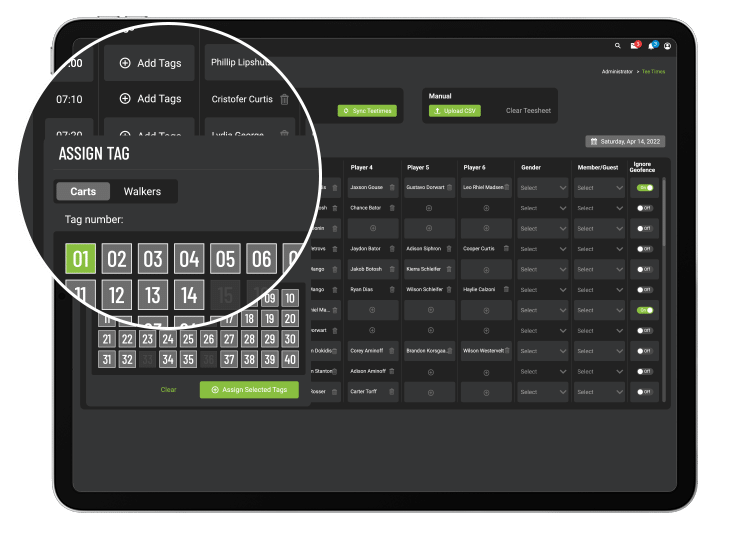
A course may have hidden capacity for 9-hole play, but that capacity is rarely obvious from the tee sheet alone. Operators need to understand when the course naturally creates space and when it is already under pressure.
Fortunately, historical pace data from a golf cart GPS system is available, helping operators identify recurring patterns. Certain time blocks may consistently move well, and some afternoons may create reliable openings for back-nine starts. Other periods may be too congested to add extra groups without negatively affecting pace. The idea is to find patterns before adding new products, so you can properly manage flow.
A data-driven approach allows operators to test formats carefully. A course might begin with front-nine-only 9-hole windows, then test selected back-nine starts during quieter periods. It may create twilight loops, league blocks, junior windows, or family-friendly play times. Each change can be measured against actual pace, wait times, and player experience.
This is a better approach than simply adding 9-hole tee times wherever the sheet looks open. A gap on the schedule is not always a playable gap on the course. The field has to be flowing properly for shorter formats to feel convenient. With Tagmarshal, courses have access to live and historical data, which helps identify where capacity opportunities exist and where caution is needed.
Golf Cart GPS System: Managing Non-Linear Routing With Live Map
Most traditional rounds are built around a simple route. You start at the 1st tee, play through 18 holes, and finish at the clubhouse. As we’ve mentioned, alternative formats break that pattern. Some players may start on the back nine while some may play only a short loop. Others may finish after nine while full-round groups will continue.
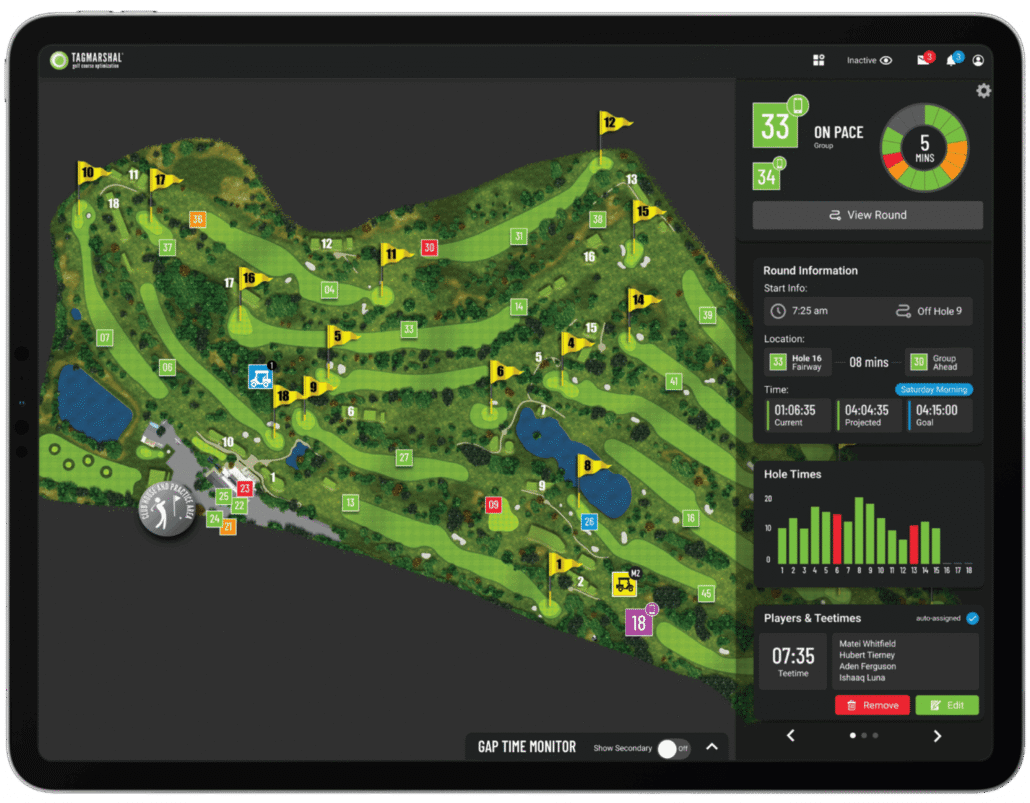
When players move through the property in different ways, course operators need a clear view of the entire field. Tagmarshal’s Live Map feature on the golf cart GPS system gives teams the visibility needed to manage this. Staff can see where groups are, how they are moving, and whether they are on pace, delayed, or causing delays.
This is important when managing back-nine starts. Before sending a 9-hole group to the 10th tee, the pro shop can look at the live position of 18-hole groups approaching the turn. If the 10th tee is about to get busy, staff members can hold the group briefly, redirect communication, or avoid creating a bottleneck. If a genuine gap exists, the course can use it with more confidence.
This kind of visibility is especially useful for clubs trying to monetize late afternoons. As such, a staff member does not have to rely just on the tee sheet or radio updates. They can see the course in real time and make decisions based on the actual spacing at the time.
Gap Time Monitor and The 10th Tee
The 10th tee is usually the pressure point in a mixed-format model. It is where 18-hole flow, 9-hole starts, halfway house activity, and player expectations all meet.
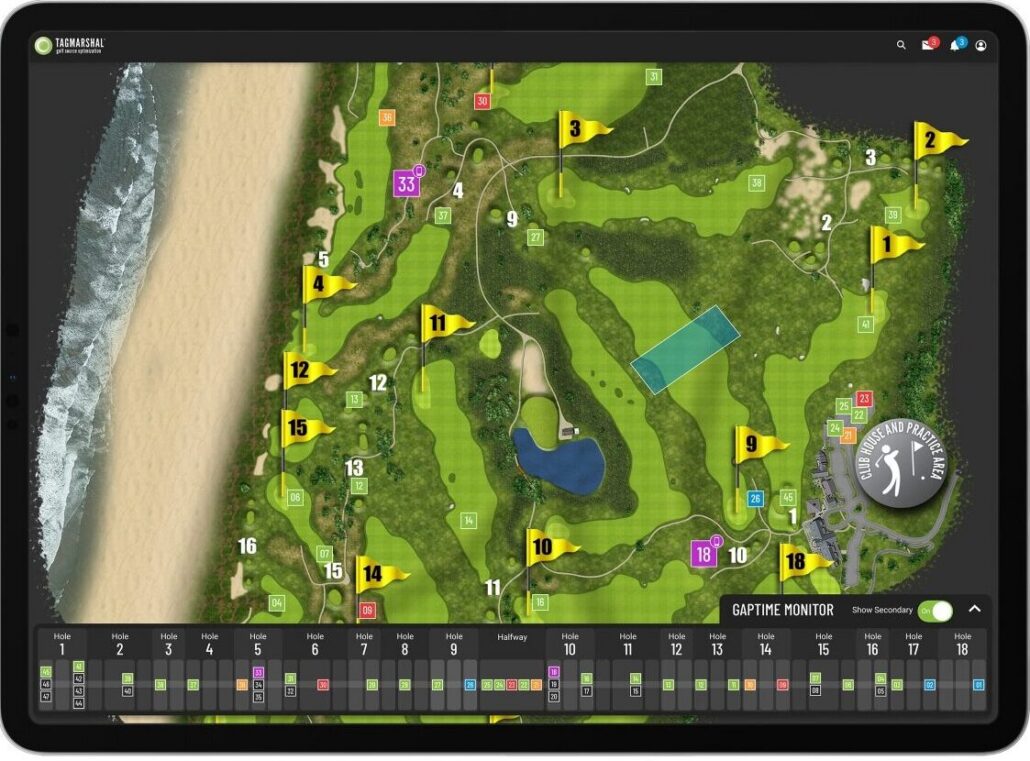
Tagmarshal’s Gap Time Monitor helps operators understand the distance and time between playing groups. This naturally makes it easier to see whether a playable gap is expanding, compressing, or disappearing. For back-nine starts, this information is especially important.
If the gap ahead of a turning group is wide enough, the course may have room to send a 9-hole group. If that gap is closing quickly, adding another group may lead to a delay. If several groups are arriving at the turn close together, staff can avoid turning the 10th tee into a traffic jam.
The goal is to use the available space smartly. Tagmarshal’s Gap Time Monitor gives staff a clear understanding of when alternative formats can be introduced without disrupting full-round golfers.
Protecting Pace in a Flexible Golf Model
Shorter golf does not automatically mean faster golf. A 9-hole round stuck behind a poorly timed merge can feel just as annoying as a slow 18-hole round. Players usually choose alternative formats when they want convenience. If the course is congested, that convenience disappears.
As such, pace protection must be built into the flexible model. Course operators need to know whether alternative-format groups are affecting full-round players and whether full-round traffic is hurting the shorter-format experience.
Tagmarshal helps courses identify delays earlier. Staff can see which groups are falling behind, where the bottlenecks are forming, and whether a routing decision is affecting the rest of the field. This allows the team to jump in before a single issue spreads across the course.
For players, that creates a better experience. For operators, it protects the value of the new product. A 9-hole rate only works if the golfer feels they received the shorter, smoother experience they expected.
Heatmap and Alternative Format Design
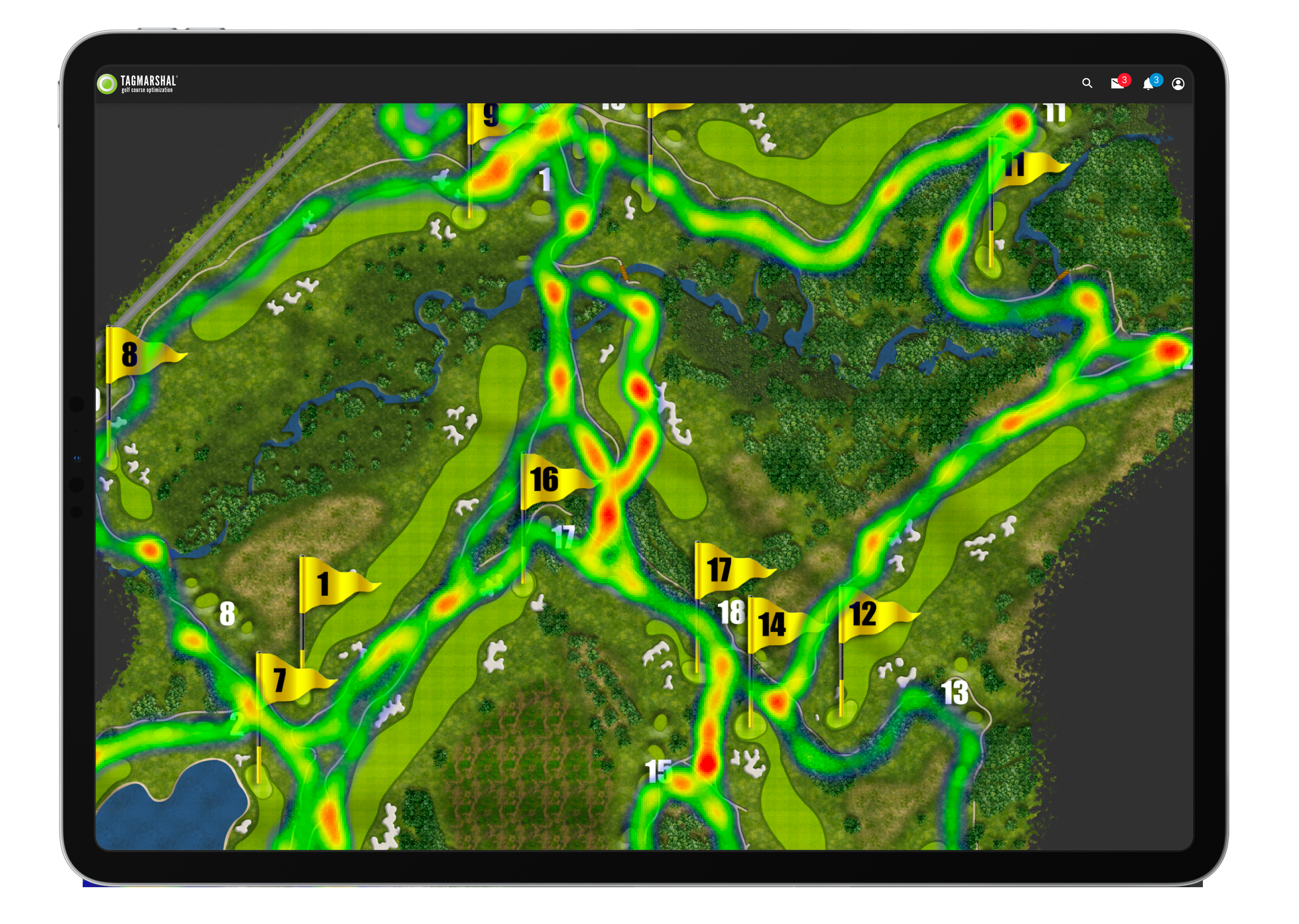
Alternative formats can influence how a course thinks about routing, signage, cart movement, and design decisions. Tagmarshal’s Heatmap Visualization shows how players move through the property. This helps operators see which areas are heavily used, which areas are underused, and where traffic patterns create wear or congestion.
That information can support better 9-hole loop design. If certain transitions regularly create pressure, the course can adjust routing. If some corridors are underused, this can mean opportunities for alternative-format play. If a short loop is creating concentrated cart traffic, the superintendent can identify the issue before turf damage becomes more serious.
For course architects and operators, this kind of data is valuable because it shows how the course actually functions. Alternative golf should not be designed only from a scorecard. It should be shaped around actual player movement, pace, and course flow.
Building Revenue Without Overcrowding

Shorter formats create several revenue opportunities. Courses can sell late-afternoon 9-hole rounds, league play, junior programs, family golf, twilight specials, short-course add-ons, and more accessible beginner products. Alternative formats can also support F&B, retail, lessons and repeat visits.
Keep in mind, however, that more players do not always mean better business. If a 9-hole game creates delays for 18-hole golfers, the course may gain one sale while damaging the experience for several others. If the merge onto the back nine is poorly managed, both groups may leave frustrated.
The best revenue strategy is to add the right formats in the right windows. A golf cart GPS system gives operators the data to test those windows, measure the effect, and refine the format. At Tagmarshal, we help courses identify capacity, monitor field flow, and protect the player experience.
Final Thoughts
The traditional 18-hole round will remain really important, but it’s no longer the only way to grow participation or revenue. Nine-hole rounds, twilight play, par-3 courses, short courses, and other alternative formats make golf more accessible.
Tagmarshal gives operators the tools to manage any complications that come with this. With Live Map, Heatmap Visualization, and real-time course data, courses can see where players are, identify available gaps, and protect pace across mixed-format play.
Discover how Tagmarshal’s golf cart GPS system can help your course maximize flow, increase revenue, and deliver a flexible, enjoyable golf experience.
SEE THE SYSTEM IN ACTION
Watch Demo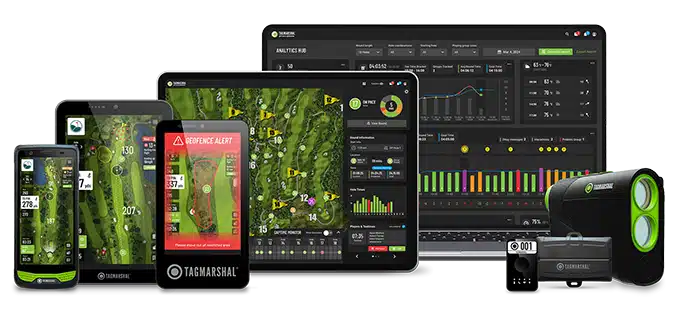
ABOUT TAGMARSHAL
Tagmarshal, the market leader in on-course optimization technology, provides courses with full, real-time operational oversight and reporting, giving golf operators the tools to manage pace and flow of play effectively, resulting in enhanced player experiences, increased efficiency through automation, and additional revenue generation.
Tagmarshal’s technology has collected over 100 billion data points from more than 95 million tracked and improved rounds of golf and has relationships with in excess of 900 partners, including Hazeltine, Whistling Straits, Baltusrol, Fieldstone, Bandon Dunes, The Old Course at St Andrews Links, Serenoa and Erin Hills.
Tagmarshal partners with several golf management groups, private, daily fee, public and resort courses, including 50 of the Top 100 courses, as well as many $40-$60 green fee courses, which are seeing excellent results using the system.
SOLUTIONS
 WATCH DEMO

