Dynamic Pricing in Golf: Using Demand and Golf Cart GPS Systems to Maximize Yield
Golf cart GPS systems are becoming increasingly important as golf courses move away from static rate cards and toward more flexible, demand-led pricing. Airlines and hotels have used dynamic pricing for decades, adjusting rates according to demand, availability, timing, and customer behavior. Today, golf is catching up, as every tee time is perishable inventory. Once a slot passes, the chance to earn revenue from that time disappears.
For operators, there is a clear opportunity. A Saturday morning tee time doesn’t carry the same value as a Tuesday afternoon tee time in poor weather. A holiday round, an early weekday tee time, and a twilight slot all have different levels of demand. Charging one fixed rate across too many windows can leave money on the table during peak periods and fail to attract golfers when demand is soft.
At Tagmarshal, our golf cart GPS systems support the operational side of dynamic pricing. We help courses monitor pace, manage field flow, identify hidden capacity, and protect the player experience behind every tee time.
Golf Cart GPS Systems: The End of the Static Rate Card

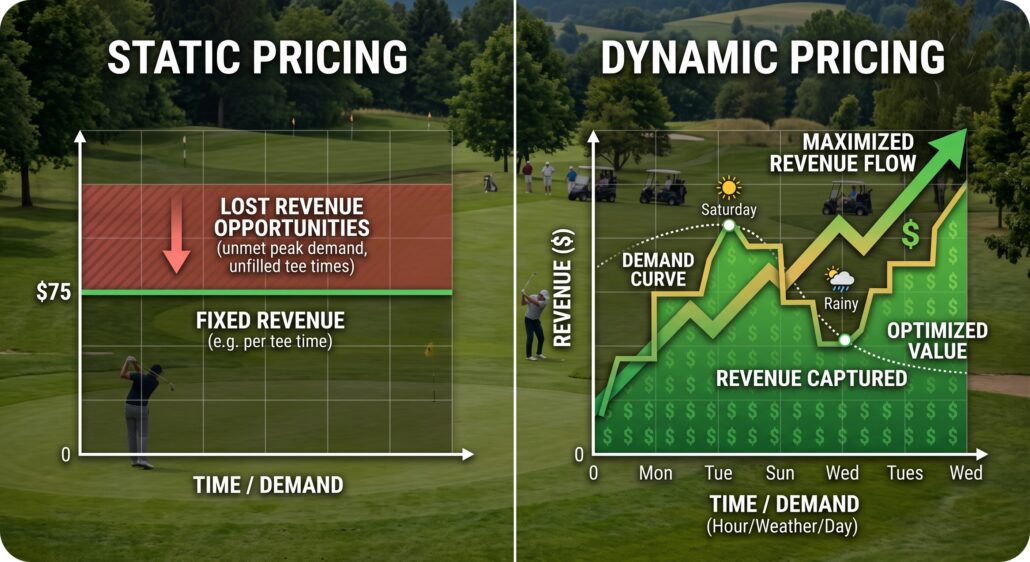
The traditional rate card is simple, but it can create problems. If a course charges the same green fee regardless of demand, it may underprice the most valuable tee times and overprice the weakest ones.
A dynamic pricing model considers each tee time to have its own value. Prime weekend mornings may command stronger pricing because demand is high and availability is limited. Late-afternoon or low-demand windows may need cheaper pricing to encourage bookings. Weather can also change the equation quickly.
A course can raise prices when there’s a lot of demand, while using promotions to fill weaker periods. That makes the tee sheet more responsive and helps operators capture revenue that a static model would probably miss.
Dynamic Pricing in Golf
Dynamic pricing uses data to adjust rates based on demand. A few common factors include the day of the week, time of day, remaining availability, booking pace, seasonality, weather, events, and historical demand patterns.
If Saturday morning tee times consistently sell out days in advance, the course may have some room to increase rates in that window. If late Tuesday afternoons are always unbooked, the course can use lower pricing to appeal to golfers. If a nearby event causes temporary demand, the course can then adjust prices.
Courses should review historical booking curves. They show when golfers usually book, which windows fill first, and which slots require more help. This allows operators to improve decision-making and react earlier, rather than reacting once the tee sheet is already underperforming.
This generally means better yield across the entire tee sheet. Strong windows can generate more revenue, while weaker windows can become more appealing to price-sensitive players. The course can serve different customer segments without treating every golfer or tee time the same.
The Psychology of the Golfer

Golfers understand that not every round has the same value, and many are prepared to pay more for a premium slot on a well-conditioned course. The challenge is in making sure that the premium experience delivers.
Dynamic pricing raises golfers’ expectations. When a golfer pays more for a peak tee time, they expect the course to be organized. They expect pace to be managed, communication to be clear, and the product to match the promise.
It’s here where poor pace can become especially damaging. A slow round can be frustrating at any price, but it feels worse when the golfer has paid a premium. If the course charges peak rates while allowing the field to become congested, it can easily hurt long-term loyalty.
Golfers are more likely to accept a change in pricing when it feels like it makes sense. Peak slots cost more because there’s more demand for them. Off-peak slots may cost less because the course wants to attract flexible players. In essence, the value exchange needs to make sense.
Golf Cart GPS Systems: Why Dynamic Pricing Needs Operational Backup
While pricing software can sell the tee time, the operations have to deliver the round. If a course is full, the pressure on operations teams increases, and there is less room for slow starts, unmanaged bottlenecks, poor turn flow, or delayed interventions.
Peak windows are usually the most profitable. They’re also the most vulnerable. More groups are on the course, golfers are paying more, and small issues can spread quickly. If a delay forms early, the entire field may feel it. If groups are spaced poorly, the back nine can start to become overcrowded. If staff don’t know the root of the issue, intervention may come too late.

Tagmarshal’s golf cart GPS systems are an operational safeguard for this pricing strategy. Our technology gives course teams real-time visibility of what is happening on the property. Staff can see where the groups are, whether they are on pace, and where the delays are beginning to form. That visibility helps courses protect the experience during the windows that matter the most.
Dynamic pricing shouldn’t operate in isolation. Pricing data shows what golfers are willing to pay, while on-course data shows whether the course is delivering the experience that justifies the price.
How Tagmarshal Supports Dynamic Pricing
Tagmarshal supports the operational side of dynamic pricing. We help operators manage the operational quality behind each tee time. When demand is high and prices rise, the course needs to protect pace, flow, and the player experience.
Our Live Map gives staff a real-time view of the field. Instead of relying on radio updates or player complaints, operators can see where groups are located and how they are moving. They can review groups that are on pace, falling behind, being held up, or causing bottlenecks.
Teams can then move from reactive to proactive field flow. If a problem begins to develop, staff can intervene before it affects the entire course. That matters during premium windows, where the cost of a poor experience is higher.
Tagmarshal’s course data also helps operators understand starter accuracy, hole-by-hole performance, pace distribution, and playing group behavior. This means teams can see which periods of the day perform well and which require more support.
This is important data. If certain time blocks consistently deliver faster, smoother rounds, the course can use that information to structure offers or set expectations. If peak periods repeatedly fall behind pace goals, this information helps identify where operational improvements are needed before prices are pushed higher.
Matching Price to Player Expectations
Dynamic pricing is more effective when courses understand the type of experience attached to different windows. Not every golfer wants the same thing. Some want a premium Saturday morning round, while others want a faster weekday experience. Others are much happier to play later in the day if the price is right.
A course might position certain windows around convenience, speed, value, or premium access. For example, early weekday groups may expect a quicker pace, while peak weekend groups may pay more for access to the most desirable times. Courses should manage player expectations.
Tagmarshal helps operators monitor whether those time blocks are meeting expectations. If a course wants to market a certain window as a smoother or faster experience, it needs data to support that claim. If the data show the window is not meeting pace goals, the course can adjust staffing, intervals, communication, or pricing strategy.
Tagmarshal helps courses protect trust, an extremely important part of a course’s reputation. The course should never create empty promises, but rather align price, demand, and delivery.
Dynamic Pricing and Hidden Tee Sheet Capacity
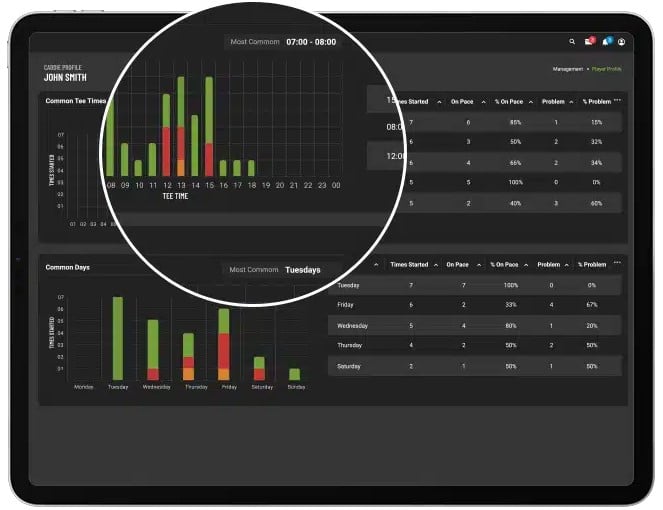
Yield is not only about price, but it’s also about capacity. A course can improve revenue by charging the right amount for each tee time, but it can also improve yield by identifying where additional capacity exists without hurting the player experience.
Golf cart GPS systems are incredibly valuable in this regard. Tagmarshal helps courses understand field flow, gap intervals, and pace patterns throughout the day. If play is naturally faster during certain windows, there may be opportunities to improve spacing. If a window is already under pressure, adding more groups may cause bottlenecks and reduce enjoyment.
The goal should be to identify safe capacity. Even one or two additional tee times in the right window can create meaningful revenue over a season, especially when green fees are strong. More golfers can also support secondary revenue through the pro shop, clubhouse, F&B, and other offerings.
Looking Beyond The Green Fee
Every golfer who arrives at a course may also spend money on range balls, food, beverages, retail, rentals, lessons, or post-round hospitality. If a tee time goes unused, the course loses all of those revenue opportunities. Dynamic pricing helps fill and optimize the tee sheet, while the broader revenue opportunity depends on the full player journey.
A golfer who has a smooth, enjoyable experience is more inclined to stay for a drink, visit the pro shop, or return for another round. Tagmarshal supports this wider revenue model via on-course communication and F&B ordering. With 2Way cart screens, courses can prompt food and beverage orders before players reach the halfway house or clubhouse.

Using Dynamic Pricing Without Hurting Loyalty
Dynamic pricing needs to be handled carefully so that it doesn’t hurt loyalty. If prices change without explanation or if premium rates do not match the experience, players are going to feel they are not getting their money’s worth.
Transparency, of course, helps. If players understand why certain time blocks cost more, they are less likely to be annoyed. Members, residents, and returning players might need loyalty structures to maintain trust. A strong pricing strategy will segment demand without alienating the people who support the course regularly.
Course operators should use data before making aggressive changes. Booking pace, occupancy, weather sensitivity, and player patterns all matter. A course should know which times are underpriced, which windows need promotion, and which periods may be operationally fragile.
This is where pricing data and Tagmarshal data complement each other. Pricing tools help reveal demand and revenue opportunities. Tagmarshal’s golf cart GPS systems reveal pace, movement, and operational performance.
What Courses Should Track
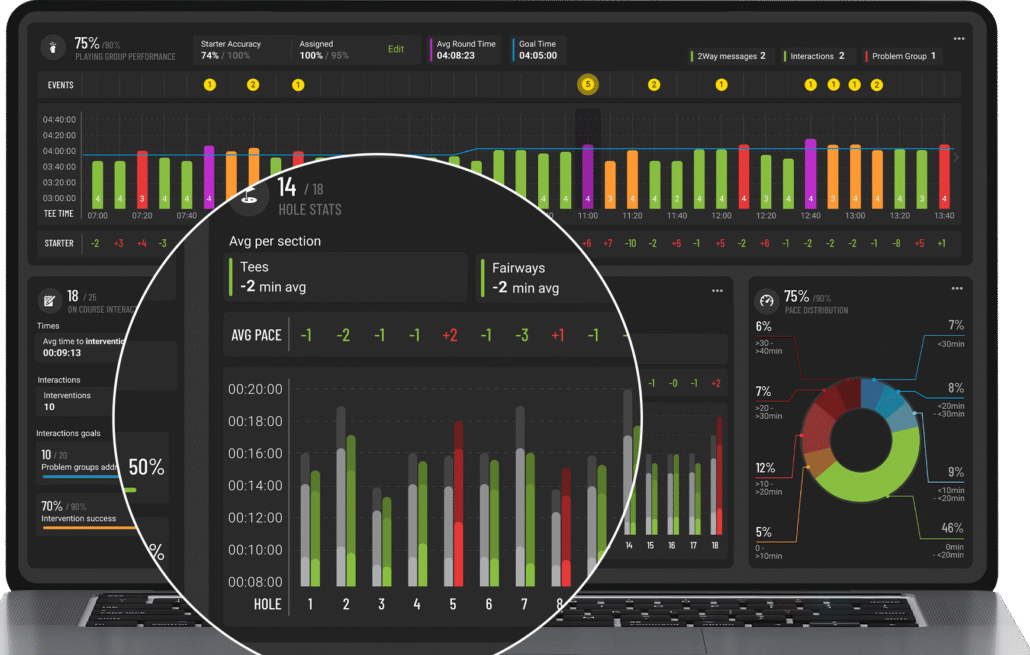
A strong dynamic strategy depends on tracking the key metrics. Courses should monitor occupancy by day and time, booking pace, revenue per available tee time, average green fee by time block, no-shows, cancellations, and weather sensitivity.
They should also track on-course performance, including average round time, pace during premium windows, number of groups on pace, bottleneck holes, starter accuracy, intervention success, and whether players have enjoyed the experience.
The link between these factors is important. A premium time block may look good because it generates higher green fees, but if it leads to slower rounds and more complaints, its long-term value will likely be lower than it seems. The best operators treat pricing and performance as connected systems.
Golf Cart GPS Systems: Maximize Your Yield With Tagmarshal
Price is only half of the yield equation. The other half is delivery. A course can charge more for a premium tee time, but it has to protect pace, flow, and service if it wants golfers to come back.
At Tagmarshal, we help courses manage the operational side of that promise. Our golf cart GPS systems give operators real-time visibility, pace insights, capacity data, F&B communication tools, and reporting that supports better decision-making. Our features include real-time tracking, Live Map visibility, Analytics Hub reporting, Gap Time Monitor, Pace Disruptors, and 2Way communication.
Discover how our golf cart GPS systems can help your course maximize yield through dynamic pricing while still protecting pace, player satisfaction, and long-term loyalty.
SEE OUR SYSTEM IN ACTION
Watch Demo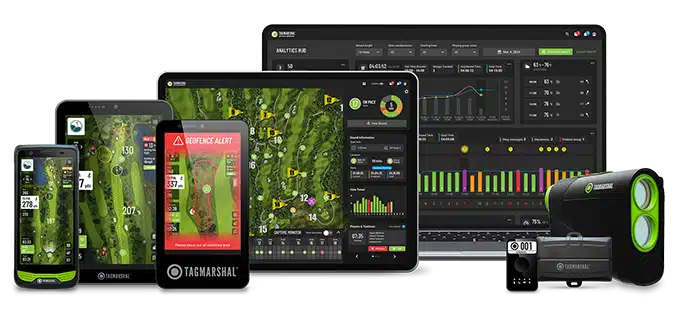
ABOUT TAGMARSHAL
Tagmarshal, the market leader in on-course optimization technology, provides courses with full, real-time operational oversight and reporting, giving golf operators the tools to manage pace and flow of play effectively, resulting in enhanced player experiences, increased efficiency through automation, and additional revenue generation.
Tagmarshal’s technology has collected over 100 billion data points from more than 95 million tracked and improved rounds of golf and has relationships with in excess of 900 partners, including Hazeltine, Whistling Straits, Baltusrol, Fieldstone, Bandon Dunes, The Old Course at St Andrews Links, Serenoa and Erin Hills.
Tagmarshal partners with several golf management groups, private, daily fee, public and resort courses, including 50 of the Top 100 courses, as well as many $40-$60 green fee courses, which are seeing excellent results using the system.
SOLUTIONS
 WATCH DEMO

