How top courses are using golf cart GPS systems to achieve pace, efficiency and revenue gains
Whether it’s a daily fee, resort, or private facility, running a successful operation is made easier through the use of golf cart GPS systems.
At the 2026 Golf Inc. Summit, it was revealed that “more people are playing more golf, in more ways than at any point in recorded history.” This is according to National Golf Foundation data, which shows that more than 48 million Americans played either on-course or off-course golf in 2025.
As participation continues to rise – up 50% in the last 10 years – operators are still expected to deliver an enjoyable on-course experience, despite a higher play volume and budgets that are increasingly under pressure from rising labor costs and inflationary pressures.
As part of Tagmarshal’s 2026 webinar series, courses that are having success using golf cart GPS systems shared some of their tips and experiences.
Golf Cart GPS Systems at Southers Marsh

Considered one of the most challenging executive setups in New England, Southers Marsh is also among the most beautiful, as the Par 61 course winds through the Stearns family’s 100-year-old, actively maintained cranberry bogs.
Southers Marsh’s story is a unique and entertaining one, and the facility has come a long way during the 25 years it’s been open. By embracing technology, owner Will Stearns and his team are going from strength to strength.
The course makes use of Classic Installed devices, installed out of sight for unobtrusive cart tracking.
Real-time pace management and golf cart GPS systems data that drives efficiency
Southers Marsh rangers have access to the Live Map, with oversight coming from Will, who checks it regularly during the day while completing other tasks.
Rather than aimlessly patrolling the course, staff can now see exactly which groups are falling out of position, and intervene before they impact the entire field.
On days when Southers Marsh runs shotgun starts, Tagmarshal’s tee sheet can be toggled to reflect this. Staff are aware of where each group started and when, taking all the guesswork out of managing these potentially tricky situations.
The geofencing tool has also been a great safety feature. The audible beeping alert is triggered when carts breach a virtual geofence, encouraging players to self-correct. This is a much more efficient way to remind players to stay out of an area than roping it off.


I can be working at the shop, check my phone, and instantly know what’s happening on the course. It’s a game changer. Trying to run our course without Tagmarshal now is like doing the job blindfolded. Our rangers absolutely love it. We can find out every single detail about a round just by opening the tablet. It’s so much less work.



Data-backed discussions with golfers
Because Southers Marsh uses the Classic Cart devices to power the golf cart GPS systems, Tagmarshal’s technology isn’t visible to the players.
However, if a ranger is required to intervene with a group that has fallen out of position, the ranger can pull up exactly what is happening on the course and show it to them. When players see that they’re not being unfairly targeted, they’re no longer on the defensive and these interactions are smoother.
Our players might not see the technology, but they can tell it’s working because their rounds are going smoothly and the experience is better. The data is great information to guide what we do on and off the course.
Golf cart GPS systems at Wyandot
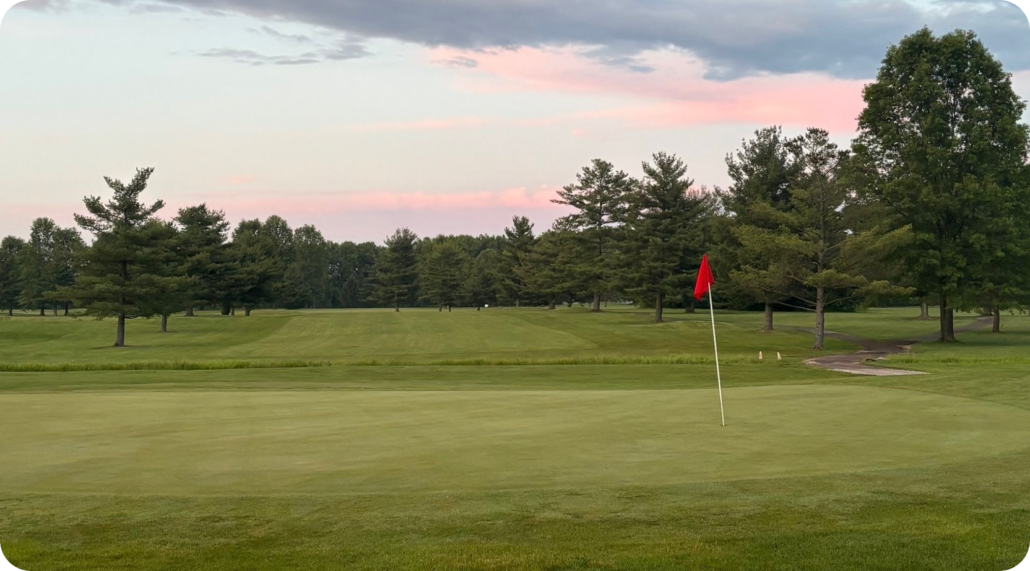
Wyandot owner Andy Joseph is a big proponent of golf cart GPS systems, and has seen the course’s average round times drop below 3h50m, thanks to a proactive approach to pace management.
Andy is a great example of someone who hasn’t taken a traditional pathway to course ownership, but has embraced technology and innovation to run a highly successful operation.
Wyandot uses 2Way 8inch cart screens, with a range of player-facing benefits, installed into an older Yamaha cart fleet.
Proactive pace management
Because players can see their pace measured against the course’s goal time, updated as they move around the course, much of the need for staff intervention has been eliminated. The color coding on the screen, indicating the group’s pace status, is easy for players to understand and they can proactively act to get back into position.
This has also freed up Wyandot’s staff to focus on the core aspects of their roles, rather than policing pace and flow. The same is true for geofencing, where a breach or two may occur before players understand that they are being tracked and automatically become more compliant without any staff intervention necessary.
We’ve made layout changes to improve the player experience based on the data, that we would never have noticed otherwise. Tagmarshal has made running our course so much simpler, allowing us to focus on other management issues. It’s really working out well.


Increasing night golf safety and enjoyment
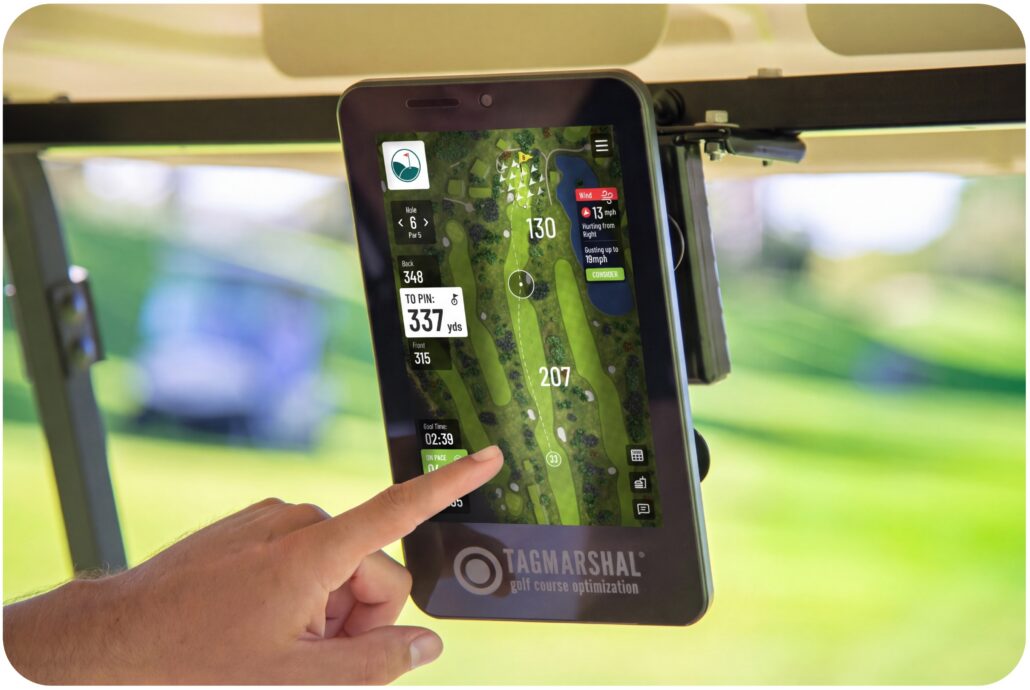
Running night events has opened up an entirely new revenue stream for Wyandot, but it isn’t without its challenges.
The two main risks are generally players not knowing the distance to the pin, therefore risking overshooting the green and hitting into another group, and not being aware of where the group ahead is.
Tagmarshal’s 2Way cart screens show players both the distance to the pin and the location of the group ahead in real-time, alleviating a lot of those safety concerns.
Generating additional revenue
The revenue potential of well-used golf cart GPS systems should not be underestimated, with many Tagmarshal course partners generating an ROI of between $200k and $300k per annum.
At Wyandot, cart screen advertising has been a great way to bring in extra revenue. Spots are sold to external advertisers, with pop-up ads appearing on the screens at GPS-triggered locations around the course.
Internally, Wyandot prompts F&B orders on the 8th hole tee box and again on the green, and there has been a noticeable increase in kitchen revenue as a result.
Ultimately, though, effective pace and flow management is what really powers a course’s economic engine. By providing a consistently enjoyable on-course experience, and ensuring that they deliver on pace expectations, Wyandot’s tee sheet is steadily filling up.
We have a lot of repeat customers, because they know our pace of play is something they can count on. It has become a big marketing tool that we can show on our website and social media. The opportunity to double our play volume is there, and implementing Tagmarshal to optimize how we run things is one of the first steps we took.
Golf cart GPS systems at top Canadian facilities
Established in 1897, Calgary G&CC has over 1,000 active playing members, an extensive teaching program and a dynamic retail operation.
Wooden Sticks GC was designed by architect Ron Garl, and 12 of the 18 holes were inspired by famous golf holes, including ‘Amen Corner’ at Augusta and the Road Hole at St. Andrews.
Calgary G&CC uses Classic Tag devices, which are clipped to a player’s golf bag before they tee off, whereas Wooden Sticks relies on 2Way 8inch screens.
Managing high-play volumes at Wooden Sticks
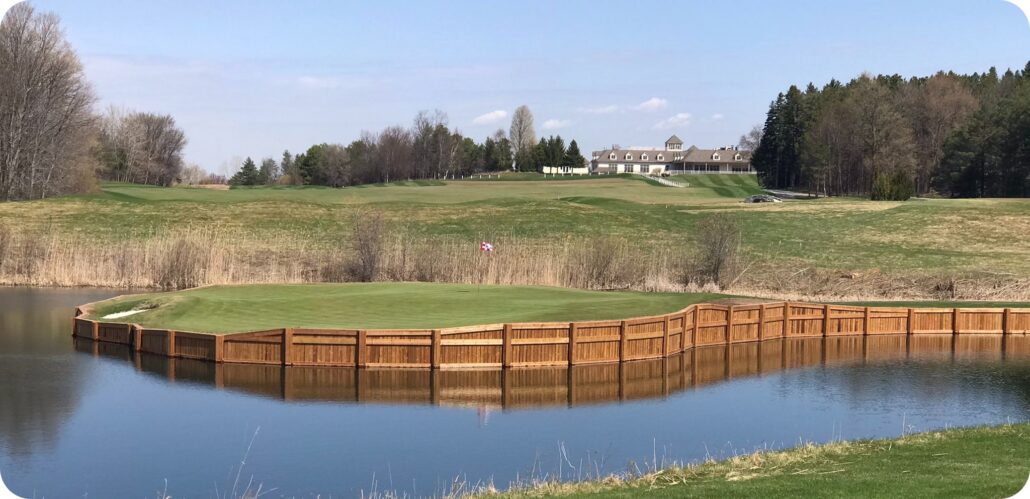
At a destination course like Wooden Sticks, there are a lot of first-time players, along with players who may visit once a year or every two years.
Having the layout of each hole visible on the cart screens is a big win for speeding up play on doglegs, as players have visibility of the carts ahead and can hit their shots as soon as it’s safe to do so.
The messaging capabilities are also very useful when weather patterns change, as can happen quite rapidly at Wooden Sticks. Director of Golf Steve Wilson and his team keep an eye on the sky, and as soon as they see something worrying, they can instantly and effectively message all carts out on the course and ensure they get to safety.
For post-round discussions, having a full history of every round played in the Track Map has proven invaluable. If players raise a concern about a round, even if it’s days or weeks after the fact, staff can pull up the round and see exactly what happened to clear up any misconceptions.
If the player is correct, and their round was adversely affected, the Wooden Sticks team can acknowledge this and take steps to rectify the situation. Because the data is black and white, it’s helped with accountability across the board.
It’s quite easy with the cart screens to monitor the field and quickly message any groups that need a nudge. From an experience standpoint, we’re proud of our high satisfaction rating. Our team has bought into it 100% and players appreciate that we’re holding ourselves and them accountable so that everyone benefits.


Exceptional member experiences at Calgary G&CC

At Calgary G&CC, Head Golf Professional Dennis Firth hears directly from members as they come off the golf course, with his office located close to the course’s bag storage area.
This means he has a good handle on sentiment, and can train his staff on which aspects of the golf cart GPS systems in place should be prioritised.
The course doesn’t have a working marshal, relying instead on the team of golf shop assistants and assistant professionals to monitor the Live Map continuously. They can see at a glance what is happening, with Dennis also able to check on the course’s situation in real time while completing other tasks.
This allows them to identify issues within the first four to five holes, and send someone out to address the group in person as required.
The data also helps with post-round conversations with members, leaning heavily on data as a way to look at a progressive approach to making their next round more enjoyable.
Tagmarshal is a great tool for proactive communication, and our members understand that we’re working with them to deliver a consistent experience. We’ve used the rich data sets to make informed operational decisions with really positive outcomes.


Conclusion
Technology plays an increasingly important role in ensuring effective on-course optimization at leading courses.
Proactive pace and flow management is central to the success of any operation, ultimately enhancing the player experience. Full, real-time oversight and the automation of previously time-consuming tasks has a sizable impact on efficiency, reducing labor hours.
Finally, an enjoyable on-course experience opens up material revenue opportunities, whether that’s increasing tee sheet capacity or justifying dynamic pricing principles.
To find out how Tagmarshal will help your operation achieve success, watch our demo video.
 WATCH DEMO
