Golf Cart GPS Systems: How Grasslands G&CC, Grizzly Ranch and Shepherd’s Crook Optimize Their Operations
With more than 900 course partners successfully utilizing Tagmarshal’s golf cart GPS systems, there are plenty of lessons to be learned from the top operators.
In the first half of 2026, Tagmarshal hosted a series of expert webinars featuring Shepherd’s Crook Golf Course, Grasslands Golf & Country Club and Grizzly Ranch Golf Club.
The webinars provide a platform to celebrate the successes achieved at these facilities and present an opportunity to learn from the techniques and technology used to solve challenges faced by many operators.
Below, we’ll highlight a few standout solutions from each facility.
Shepherd’s Crook Golf Course
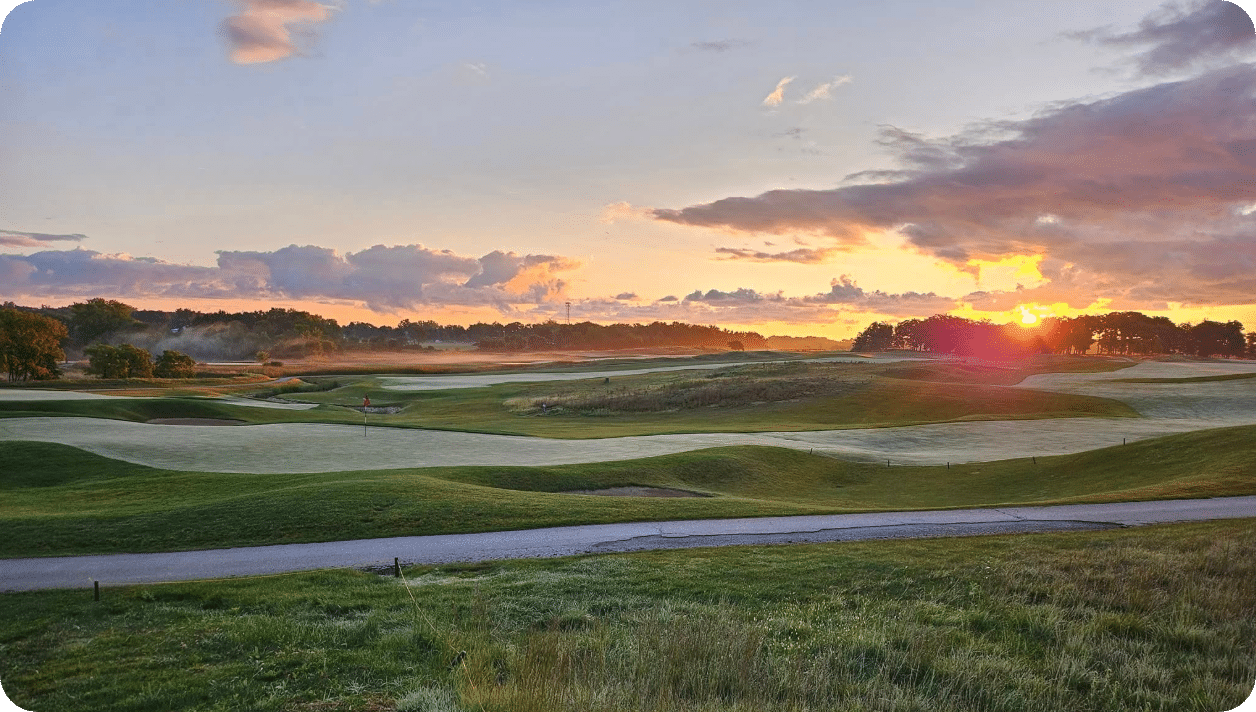
Located north of Chicago in the Zion Park District, Shepherd’s Crook offers a classic links-like layout featuring unforgiving bunkers and native grass, undulating putting surfaces and wind that sweeps in from Lake Michigan.
Shepherd’s Crook is a daily fee facility that makes use of Tagmarshal 2Way cart screens across its fleet.
Golf cart GPS systems data: hole-by-hole run times
As a high-play-volume public facility that needs to maximize rounds during the months when the course is open, Shepherd’s Crook relies on golf cart GPS systems data to maintain and improve pace and flow of play.
Having data that highlights the average run time for each hole has proven valuable to Kara Kaneko, Shepherd’s Crook’s Golf Ops Assistant GM, and the team. Firstly, they can set realistic pace targets for each hole, along with spotting opportunities to tweak hole setups that may need to play quicker (or even slower) for optimal flow.
Tagmarshal’s data also breaks each hole down into tee, fairway and green segments, highlighting how long players are waiting on each tee box. This data is a valuable tool in identifying where bottlenecks are most likely to occur.
Oftentimes, a player’s perception of pace is more important than the actual round time. When they are repeatedly waiting on tee boxes, or must wait on multiple holes for the green to clear before hitting, a round can seem far slower than it actually is.
Kaneko says that before Tagmarshal, average round times were in the 4h15m to 4h30m range. Across the 2025 season, data shows that the average round time was down to 4h03m. The readily accessible data makes it easier to report to the board, which can clearly see what the facility is doing well and where potential improvements could be implemented.

We’re able to drill down into each hole’s run time and see where we can tighten things up, helping us improve round times and the player experience. If we have a problem round or an angry golfer, we use the Track Map to go back and see exactly what happened and, really importantly, why it happened.




How 2Way screens power Tagmarshal’s golf cart GPS systems
All of the golf cart GPS systems data gathered by Shepherd’s Crook is done so via the 2Way 8inch cart screens.
The best-in-class screens offer players several experience enhancements, showing an overview of each hole with yardages to the green. Players can tap on the screen at any time and be shown distances to water hazards or bunkers and can send direct messages to, as well as receive messages from, Shepherd’s Crook staff.
The screens also display live locations of all carts on the course, so that each group knows exactly where the group in front of them is and can safely hit their shots. On hole 14, in particular, where bottlenecks have previously occurred when groups don’t have line of sight of what is happening ahead of them, it has sped up play and improved course flow.
Shepherd’s Crook also makes use of on-screen messages to ensure groups receive weather alerts timeously, as well as to prompt food and beverage orders at strategic points during the round, boosting its bottom line and reducing the wait time at the halfway house.
The customizable on-screen prompts are a fantastic way for us to communicate with players around things like food ordering, booking rounds and weather. Our golfers love having an overview of each hole on the screen and being able to tap and get exact yardages to hazards and pins.
Grasslands Golf and Country Club

Golf Digest Magazine has rated Grasslands Golf & Country Club as one of the top clubs in the nation, with a full restoration project between 2024 and 2026 restoring the course to its Championship form.
The high-end private facility began utilizing Tagmarshal’s system at the start of the 2025 season and saw immediate results, with members enjoying the 2Way 8inch cart screens.
Geofencing groups set up via golf cart GPS systems

Protecting and maintaining the pristine conditions is one of the main reasons that Grasslands implemented Tagmarshal’s golf cart GPS systems.
The club has set up geofence groups – greens, tees, and cart path only – that it can toggle between as required depending on weather conditions and play volume on the course that day. When a member breaches a geofence, the screens alert them so that they can exit the restricted area.
The need to protect sensitive turf is heightened by ongoing water restrictions in Florida. By virtually cordoning off sensitive areas, the superintendent and maintenance teams can reduce wear and tear, which ultimately reduces the need for these areas to be watered and looked after.
Alongside having the yardages and live pace of play visible on the screens, members have really enjoyed the well-maintained conditions, elevating the member and guest experience.
Nobody is under more scrutiny and pressure than your superintendent. To have tools in place that help them deliver a really good product is invaluable to us. We’re dealing with water restrictions in Florida, so our superintendents love being able to select certain holes to make cart path only for a day for added protection. The geofencing is really easy to use and when we need to make adjustments, it only takes a few minutes and it’s perfect.


Using golf cart GPS systems to generate additional revenue
While revenue generation is not necessarily something that private clubs focus on, Grasslands has found a shrewd way to increase pro shop sales using golf cart GPS systems.
During the round, the cart screens show adverts highlighting events, deals, and demo days that the course is hosting. These include Senior Club Championships, golf tournaments, and club fitting and demo days from the likes of TaylorMade and Srixon. The on-screen ads include scannable QR codes where members and guests can book a time slot directly from their phones. Along with the value-add of golfers being kept informed, the revenue upside has been very impressive.
Our fleet has the 10-inch screens, which are awesome. When we started advertising our events and demo days on the cart screens, our hard goods sales went up 27%. That’s a big difference in your shop turnover.
Grizzly Ranch Golf Club
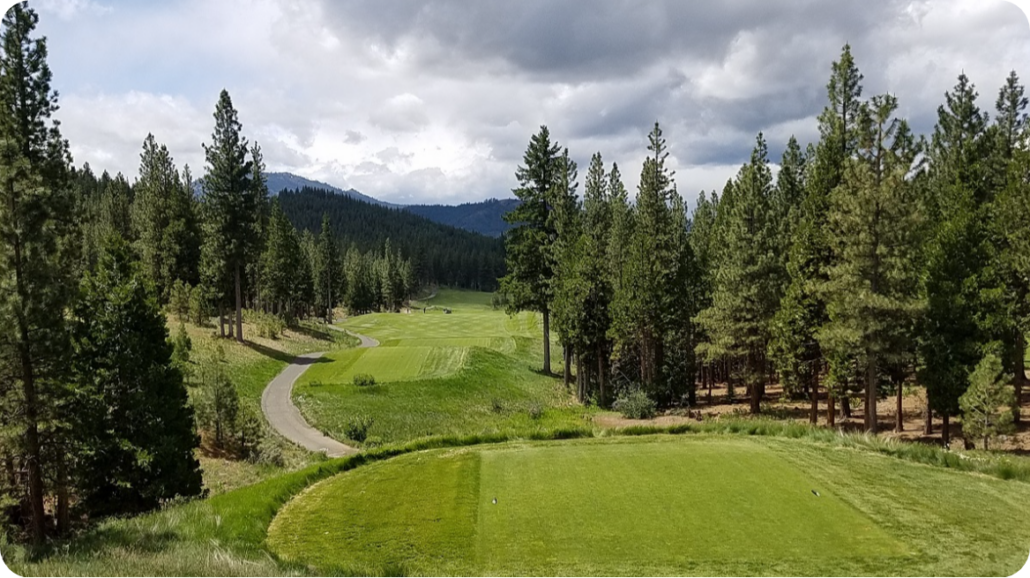
Consistently ranked among the Top 100 US courses, Grizzly Ranch is located in the Sierra Nevada foothills, 50 miles northwest of Reno, and is known for delivering exceptional player experiences.
Grizzly Ranch recently upgraded to the 2Way 10inch cart screens, after several successful years using the 8inch devices.
How players self-police pace using golf cart GPS systems
The most unpopular staff member on a golf course is the traditional marshal or ranger, but technology is changing both the scope and nature of the task they face when monitoring pace of play.
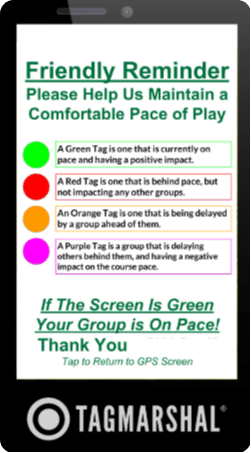
As groups tee off at Grizzly Ranch, they are shown how to monitor their pace measured against the course’s goal time. An on-screen visual outlines what each of the four different colors that are displayed on the screen means:
- Green: You are on pace. Thank you!
- Orange: You are being delayed by a group ahead. Our team is on it!
- Red: You are out of position but not yet impacting other groups.
- Purple: You are delaying other groups. Please move back into position.
This clear line of communication reduces the need for staff to intervene, with members made aware as soon as they fall out of position, so that they can self-correct. If a staff member does approach them, they know that the conversation is being guided by data, rather than emotion or guesswork. Additionally, if they are frustrated by being held up by a group ahead (orange), they know that staff are already addressing the issue.
The cart screen system takes care of pace almost on its own, and we just monitor it remotely, eliminating the old marshal role that nobody likes. With well-trained staff, you can take care of any major pace disruptions before they affect the field, and players are receptive when you show them data.


Adding capacity based on golf cart GPS systems data
The greater the volume and depth of data a course has at its disposal, the greater the opportunity to identify opportunities for optimization.
Adding tee sheet capacity is one of the most impactful ways to add revenue, given that it’s essentially straight bottom-line gains. However, adding capacity also comes with the risk of adversely impacting pace and flow, which negatively impacts the player experience and makes it less likely that they will return to play at the facility again or recommend it to anyone.
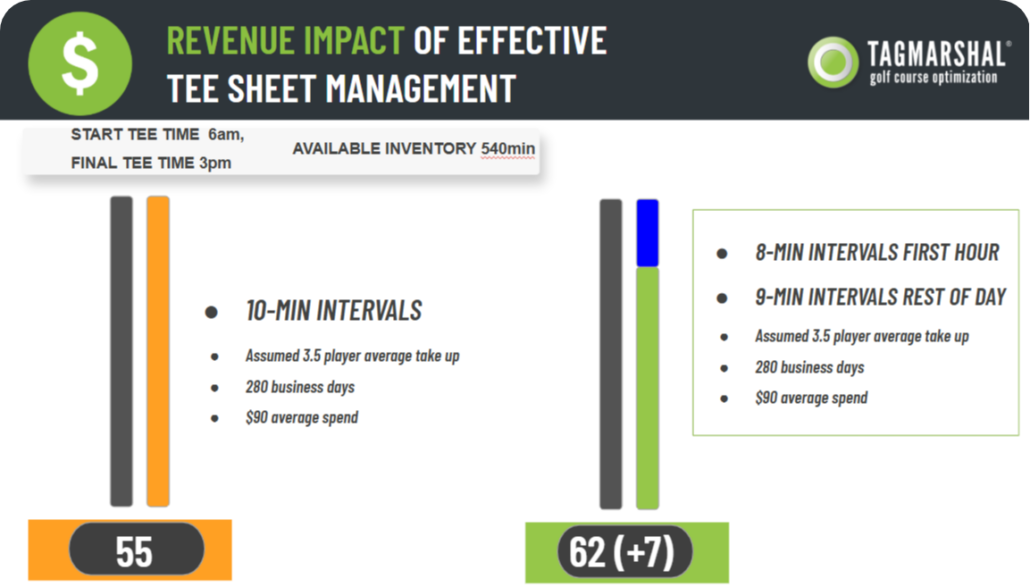
At Grizzly Ranch, the consistent improvement in average round times has created an opportunity to add tee times during periods of the day that play quicker. While the changes have yet to be implemented, staff are considering switching from straight 10-minute gap intervals throughout the day to 8-minute intervals during the first hour, and then 9-minute intervals for the rest of the day. Even if this were only implemented on weekdays, when the course plays quicker, the revenue upside of creating up to 7 additional tee times on a single day is huge.
Since we’ve started using Tagmarshal, regular players often come to us and say they have noticed that pace of play has improved significantly. The extensive data gathered shows we can gain a few extra tee times, and that’s something we are looking into, which we wouldn’t have known with pen-and-paper calculations.
Conclusion
Courses that move away from a traditional, outdated model of course management to embrace technology create a point of difference that golfers can feel (and see) the benefits of.
With the likes of DoorDash, Uber, Amazon Prime, and others delivering frictionless consumer experiences, golfers now expect the same level of technology involvement to ensure that courses respect the time and money set aside to play a round.
Tagmarshal’s system has been designed so that it provides as much benefit to a $60 daily fee operation as it does to a high-end private facility. To find out more, watch our short demo.
SEE TAGMARSHAL IN ACTION
Watch Demo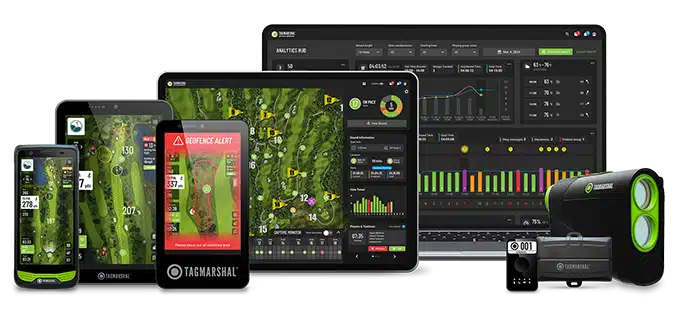
ABOUT TAGMARSHAL
Tagmarshal, the market leader in on-course optimization technology, provides courses with full, real-time operational oversight and reporting, giving golf operators the tools to manage pace and flow of play effectively, resulting in enhanced player experiences, increased efficiency through automation, and additional revenue generation.
Tagmarshal’s technology has collected over 100 billion data points from more than 95 million tracked and improved rounds of golf and has relationships with in excess of 900 partners, including Hazeltine, Whistling Straits, Baltusrol, Fieldstone, Bandon Dunes, The Old Course at St Andrews Links, Serenoa and Erin Hills.
Tagmarshal partners with several golf management groups, private, daily fee, public and resort courses, including 50 of the Top 100 courses, as well as many $40-$60 green fee courses, which are seeing excellent results using the system.
SOLUTIONS
 WATCH DEMO

