Golf Cart GPS Systems: Understanding Putting and Reading Greens
In the age of smart technology and golf cart GPS systems, understanding how to putt and read greens is still as important as ever. Putting accounts for around forty percent of the shots in a typical round. A handful of missed putts can be the difference between a solid score and a frustrating one.
Still, most golfers choose to spend practice time working on full swings and huge distances rather than the art and science of rolling the ball into the hole. Strong putting is about understanding the surface, slope, speed, and physics.
Your approach strategy has a big impact on the difficulty of the putts you face, and smart technology like Tagmarshal’s WindTag can be used to assist, despite not being a traditional putting aid.
In this article, we’ll take a look at how putting works, how to read greens more effectively, why speed and break matter, and how golf cart GPS systems and smart golf technology can assist.
Golf Cart GPS Systems and The Science Behind Putting
To the untrained eye, putting might look simple; you’re close to the hole, the swing is short, and the ball doesn’t fly off into the distance, so what could go wrong? Well, quite a bit. The truth is that a putt is a rolling physics experiment that gets influenced by gravity, friction, grass texture, moisture, and speed.
Why Speed is a Governing Factor
On the shorter putts, line is the most important factor, but once a putt stretches beyond 10-12 feet, speed control takes priority. A ball rolling too softly is more vulnerable to slope, moisture, and texture, while a ball rolling too firmly won’t have time to take the full break.
Slope is Never Optional

Every green has a natural low point, and every putt, no matter how straight it looks, will curve in that direction. This spot is called the fall line. Even when a slope appears almost flat, your ball is still being pulled slightly downhill. Gravity will always win. A putt that looks dead straight can still leak to one side at the end.
Surface Conditions Matter
When putting, surface conditions are going to play a major role:
- Grain direction affects roll
- Wet surfaces slow the ball quickly
- Firm afternoon greens will feel quicker
- Grass type influences friction
All of these factors combine to shape how quickly the ball slows down and how much it curves. By understanding the way that surface conditions affect the ball, putting can become less unpredictable.
Golf Cart GPS Systems: How to Read a Green
A good putter knows that reading greens begins long before you reach the putting surface. This means paying attention to slope, elevation, and green design as soon as you step on the fairway. The broad shape of the green often dictates the break long before you set the ball down.
A green that, at first, appears flat could actually be part of a gentle slope. Once you’re standing over the ball, this becomes much harder to see.

Start Your Read From The Fairway
When you approach the green, look at the surrounding terrain. Greens don’t exist in isolation; they follow the overall topography. If an entire hole is sloping from right to left, the green will likely lean in the same direction, at least in part.
Look at the high side and the low side, and ask yourself where the water would naturally flow. These small observations give you your first clues about break before even taking your putter out.
Walk The Line, Feel The Slope
As you get to the green, take the time to walk along the intended path of your putt. This can help you feel slope rather than just taking a guess based on visuals. No matter how experienced you are, your eyes can be easily fooled, especially on modern greens with subtle contours. By walking the line, your body will be able to feel any imbalance.
Elite pro players often discuss “feeling” the slope through their feet. This technique can, therefore, clearly be beneficial, and it’s worth taking the time to practice it. Try to identify when you shift slightly to one side as you walk; that feeling is essentially the slope telling you which way the ball is likely to shift.
Read From Different Perspectives

Part of reading a green is learning how to see the full picture. While most golfers only read from directly behind the ball, this offers only one perspective.
A stronger routine would be to take a quick look from the low side of the putt as well. From this angle, you can see subtle tilts, slight humps, drainage patterns, and more features; this gives you the clearest angle from the slope.
A brief look from behind the hole can also be a huge help, as it shows you the last portion of the putt where the ball is traveling its slowest and most susceptible to break.
Find The Fall Line
As mentioned, every green has a fall line. Once you determine where it is, every putt becomes easier to picture in your head. Putts that cross the line will always break toward it, while putts running parallel to the fall line will have less break but more speed variation, depending on whether they’re uphill or downhill. As a golfer, understanding this relationship gives your reads more structure than simple guesswork.
Speed And Slope Work Together
Always remember that speed and break are inseparable. A strong putt holds its line longer, while a softer one will likely curve more. The same putt can be made in two entirely different ways: firm and inside, or soft and outside. The putter stroke you choose will affect the shape of the putt itself. By consistently controlling your pace, you’ll get more predictable results.
Putting For Speed And Break
Putting is about more than lining up the ball with the hole. Controlling speed is of paramount importance; a ball rolling too quickly will overshoot, while one rolling too slowly may stop short. On longer putts, any small errors are magnified, highlighting why controlling pace is more important than perfect alignment.
We’ve mentioned how speed and slope are inseparable; softer putts take longer to reach the hole, while firmer putts tend to hold their line more effectively.

Longer putts are especially challenging, as small misreads and uneven surfaces have a greater impact over distance. Professional golfers tend to focus on leaving manageable second putts rather than attempting risky hole-outs.
To build speed control, intentional practice is key. Drills like ladder drills, uphill and downhill putts, and varying stroke lengths can all improve your feel for distance as a golfer. Your approach strategy also plays a major role: landing closer to the hole will reduce the challenge of controlling speed.
Tools like Tagmarshal’s WindTag can also help golfers hit approach shots closer, making putts shorter, simpler, and easier to control.
To sum it all up, good putting means effectively balancing speed with break. If you’re able to control pace, read slopes carefully, and set up easier putts through smart approach play, you can improve your consistency and confidence on the greens.
Mastering Your Stroke
The execution of your strike is, of course, incredibly important. It’s a delicate balance of form, rhythm, and contact. Once the read and line are decided, the quality of the stroke determines the outcome.
Get Into A Balanced Setup
Take a comfortable stance with your feet roughly shoulder-width apart and parallel to the target. Lean from your hips and position your eyes over, or just inside, the ball. This helps eliminate unnecessary body movement.
Aim With Intention
Before you start the stroke, visualize the path that you want the ball to follow and square the putter face to that starting direction. Putting with intention builds confidence and decreases the chance of second-guessing mid-stroke.

Grip The Club With Relaxed Control
Your grip should feel secure without gripping too tightly. Softer hands reduce wrist action and allow your shoulders to guide the motion. Too much tension tends to cause jerky strokes and make distance control more difficult.
Use Smooth, Shoulder-Driven Motion
Take the putter back in a steady rhythm, then let it flow forward, brushing the ball and continuing along the target line. A smooth follow-through will help maintain direction and a consistent roll.
Keep Your Eyes Steady Through Contact
Looking up too early is a common mistake that golfers make. Keep your head still and let your eyes remain focused. Staying down improves contact and keeps the stroke in line.
Strike The Ball Cleanly
Always aim to meet the ball with the center of the putter face. Strong, centered contact starts the ball rolling smoothly from the moment it leaves the face, minimizing bounce and helping it stay true to the line you chose.
Golf Cart GPS Systems And Putting: Improving Your Setup For Easier Putts
Tagmarshal is the industry leader in golf course optimization. The technology draws on the full power of AI and machine learning, using data from over 95 million tracked rounds of golf to offer courses real-time operational insight and reporting. With Tagmarshal, courses can give players a much-improved playing experience.
While Tagmarshal is not a putting aid in the traditional sense, it still plays a major role in putting outcomes by helping to improve your approach and positioning on the green. The length and difficulty of your first putt are often more important than the putting stroke itself.
Long, downhill, or heavily breaking putts increase the chances of error. Shorter, well-positioned putts are much easier to control. Tagmarshal’s golf cart GPS systems can influence these situations before you’re even standing over the ball.
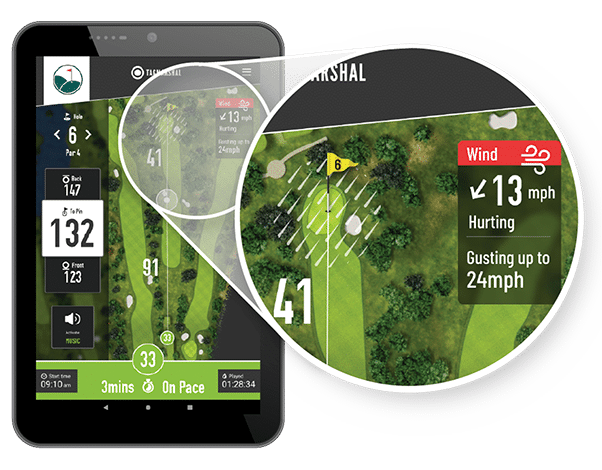
Tagmarshal’s industry-first innovation, WindTag, provides precise, wind-adjusted yardages and data for every approach shot. With accurate information about distance and direction, WindTag eliminates the need for guesswork. Even slight improvements in approach accuracy will translate into shorter first putts.
Players can also get strategic insight into the course from Tagmarshal’s golf cart GPS systems. You can use the data to identify safe landing areas, problem zones, and avoid hazards. With that, you can avoid positions that would create challenging putts.
Tagmarshal helps golfers control the conditions that influence putting rather than the putting stroke itself. Better approach shots mean shorter, straighter, and more manageable first putts. Combining this with careful green reading and speed control can help you take your putting game to new heights.
While golfers can benefit from traditional putting aids, like alignment tools, putting mats, and stroke analysis, no amount of putting practice can fully compensate for poor approach shot positioning. This is where Tagmarshal becomes key.
Final Thoughts On Golf Cart GPS Systems And Putting
Putting may seem like one of the simplest motions in golf, but it still demands some of the most thoughtful decision-making on the course. Understanding how slope, speed, and green design influence the roll of the ball helps you read putts more confidently and execute them with greater consistency.
While technique matters, many of the challenges associated with putting begin before you even reach the green, making smart approach play and positioning key parts of lowering scores.
With Tagmarshal’s WindTag and golf cart GPS systems, players can take the guesswork out of approach shots, leading to smarter shots, landing closer to the pin, and setting up simpler opportunities on the greens. Visit Tagmarshal or get in touch today to learn more.
SEE TAGMARSHAL IN ACTION
Watch Demo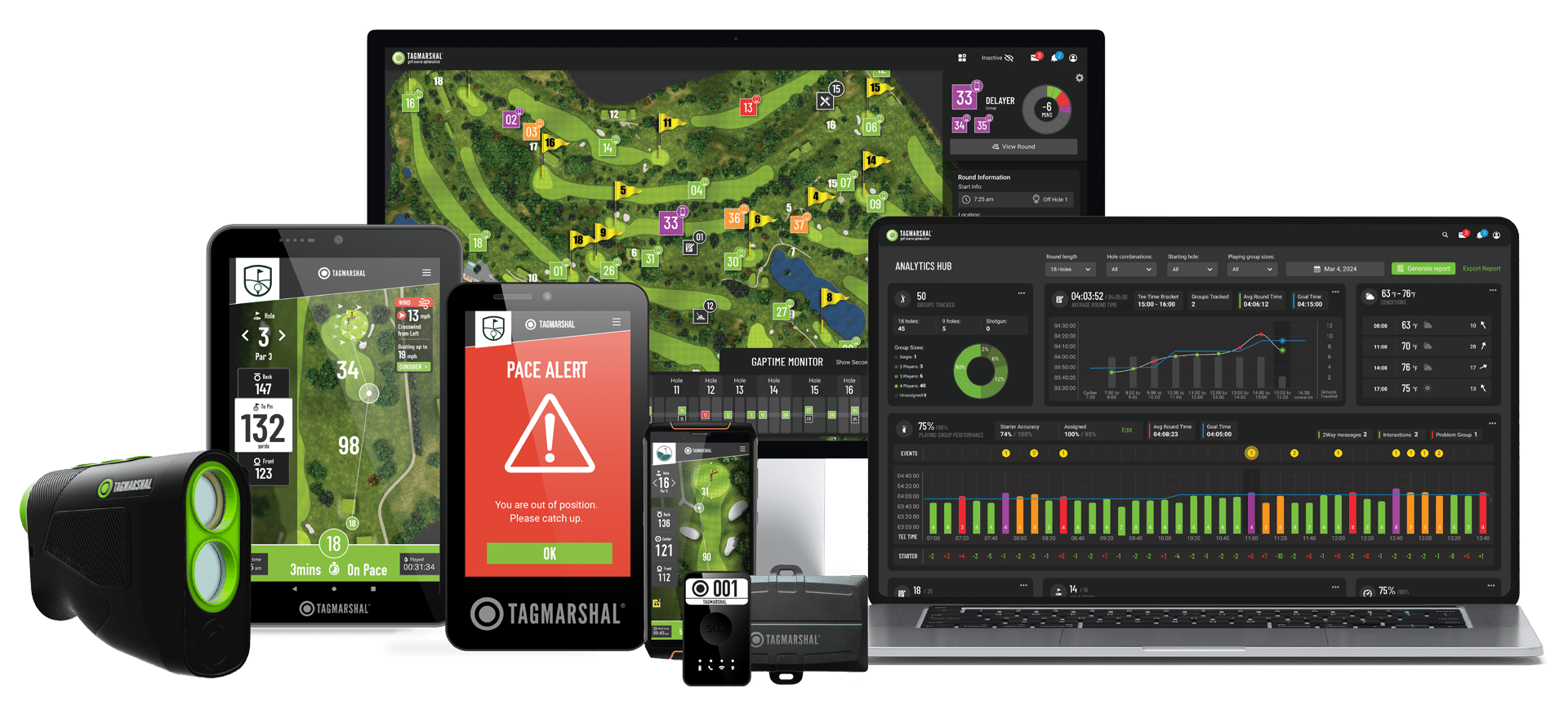
ABOUT TAGMARSHAL
Tagmarshal, the market leader in on-course optimization technology, provides courses with full, real-time operational oversight and reporting, giving golf operators the tools to manage pace and flow of play effectively, resulting in enhanced player experiences, increased efficiency through automation, and additional revenue generation.
Tagmarshal’s technology has collected over 100 billion data points from more than 95 million tracked and improved rounds of golf and has relationships with in excess of 900 partners, including Hazeltine, Whistling Straits, Baltusrol, Fieldstone, Bandon Dunes, The Old Course at St Andrews Links, Serenoa and Erin Hills.
Tagmarshal partners with several golf management groups, private, daily fee, public and resort courses, including 50 of the Top 100 courses, as well as many $40-$60 green fee courses, which are seeing excellent results using the system.
SOLUTIONS
 WATCH DEMO

