
Our ‘Quick Wins’ series focuses on the proactive pace management strategies in place at some of our standout facilities, where forward-thinking operators have fully embraced the use of technology to ensure a memorable on-course experience.
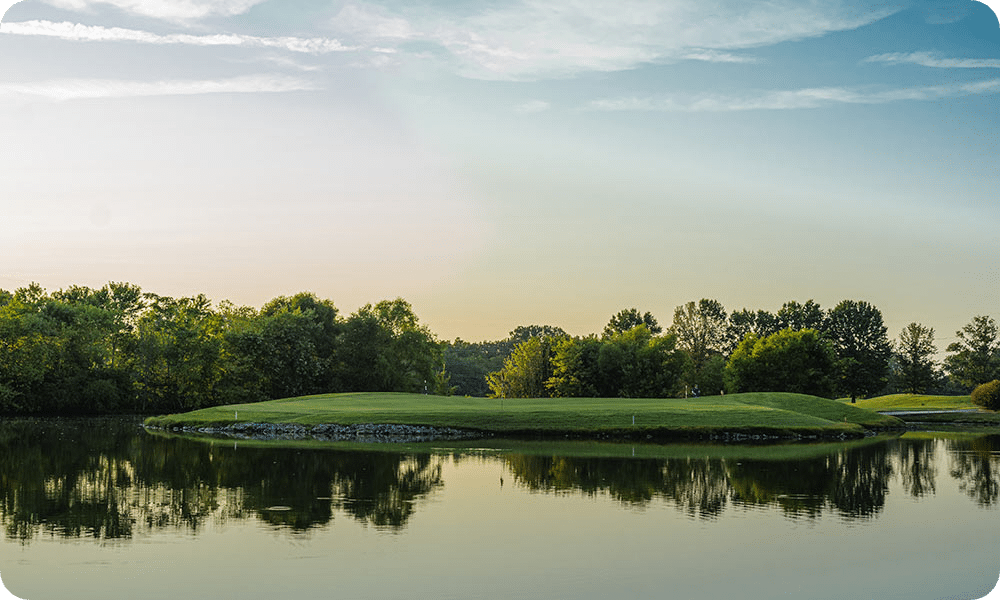
Built on historic farmland in the late 1980s, Franklin Bridge Golf Club is a links-style course that features beautiful old trees, the magnificent Harpeth River crossing back and forth, and an 18th hole with an island green finish in front of the clubhouse, where patrons watch on.
Franklin Bridge’s owner, Brooks West, PGA, is a forward-thinking operator with a fantastic understanding of what breeds player loyalty. Brooks and his team were recognized for their exceptional efforts with a Diamond Award in the 2026 Tagmarshal Awards, as well as winning Best US Newcomer in the 2024 Tagmarshal Awards.
Franklin Bridge uses Tagmarshal’s 2Way 8inch Cart Screen. We asked Brooks 5 questions about how the daily fee facility delivers on its pace promise to players, while also ensuring tee sheet capacity is maximized.
1. What processes have you implemented to improve pace and flow?
Consistent pace of play management of today’s burgeoning tee sheets begins and ends with data. If you don’t have a GPS System with each group, there is just no way to consistently deliver an enjoyably paced round of golf. The key is to catch it early. The vast majority of the time, a problem group is behind your pace standard by the 3rd or 4th hole. Focus attention there, especially on weekends when you have less avid golfers playing, and communicate that you need them back on pace within 2 holes. Follow up with them in 2 holes, especially if they got back on pace; offer them a draft beer token, or at least a quality ATTA-BABY!
2. How do you communicate with players around pace?
I have shifted my perspective on this a bit over the past 4 to 5 years, since I’ve had GPS data. I used to think that cart screens were antiquated with smartphones, making them an unnecessary cost and something else to manage, but I was wrong! The way the screen shows players their pace of play status is a FUNDAMENTAL shift in the ranger-golfer interaction that reduces defensiveness and lowers the natural tension of one grown man telling another grown man (who paid to be there and has a beer in his hand!) what to do!
Another very important principle that Tagmarshal has helped me distill is that there are two distinct buckets of pace of play management: overall pace and time spent waiting. While the first one is what people most often exaggerate (ahem…talk about…excuse me), it is really the second one that has the bigger negative effect on how they enjoy the round. Watching your backup holes and keeping tees forward (especially on windy days) on holes with forced carries is a good start.

3. What data do you rely on to inform your strategies?
Dialing in your hole-by-hole pace splits is critical; moreover, really work hard on where your geofences are placed for the ‘start’ of each hole, and be sure to consider different tee markers, where golfers naturally park their carts, how long the turn flow takes, and other measurables.
4. What technology do you lean on to facilitate oversight?
We went to a customer app through Lightspeed a couple of years ago, and it has drastically improved our customer experience, particularly our loyal, frequent customers. They can see, manage, and make tee times seamlessly and in one place. We also keep practice facility schedules and F&B hours updated on there, so it really cuts down on the calls to the golf shop and text messages to high-profile staff members.
5. What outcomes have you seen as a result of consistent pace and flow at your operation?
Managing pace of play at a busy public golf course is quite the mousetrap. If you do it well (under 4h20m at our course), nobody really says anything or thanks you. But if you miss the mark, they disproportionately blast you on social media and with bad reviews. Once we reached critical mass in our business post-pandemic, we put some major initiatives into staffing up our golf operation and restructuring their focus, freeing them up to monitor Tagmarshal and catch problems quickly to address them with ‘targeted rangering’.

Successful pace of play management is just like all earthly success: it is rented, not bought, and the rent is due every day.



Technology has helped Franklin Bridge optimize tee sheet capacity without compromising the player experience, driving repeat play and positive referrals.
To find out more about how Tagmarshal will help your operation more effectively manage pace and flow, watch our short demo video or schedule a live demo.
ABOUT TAGMARSHAL
Tagmarshal, the market leader in on-course optimization technology, provides courses with full, real-time operational oversight and reporting, giving golf operators the tools to manage pace and flow of play effectively, resulting in enhanced player experiences, increased efficiency through automation, and additional revenue generation.
Tagmarshal’s technology has collected over 100 billion data points from more than 100 million tracked and improved rounds of golf and has relationships with in excess of 1,000 partners, including Hazeltine, Whistling Straits, Baltusrol, Fieldstone, Bandon Dunes, Streamsong, Shinnecock Hills, The Old Course at St Andrews Links, Sand Valley and Erin Hills.
Tagmarshal partners with several golf management groups, private, daily fee, public and resort courses, including 50 of the Top 100 courses, as well as many $40-$60 green fee courses, which are seeing excellent results using the system.
SOLUTIONS
 WATCH DEMO

